
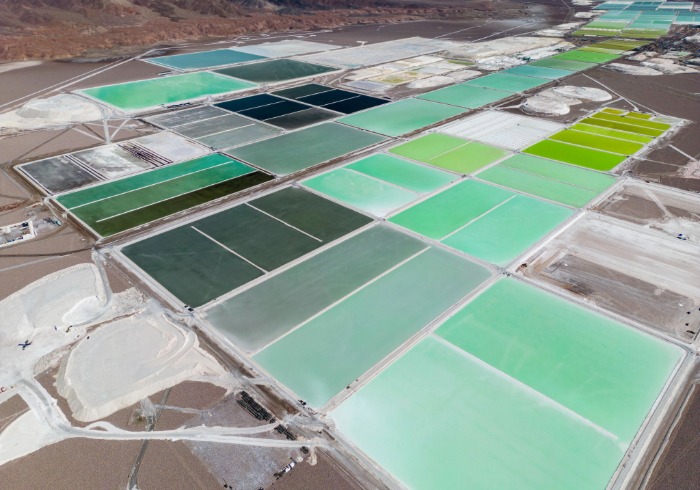
As South America’s Lithium Triangle takes on greater global strategic importance, insurance broker WTW has urged companies to assess whether they are sufficiently protected against potential supply chain disruptions.
The Lithium Triangle, which encompasses northern Chile, north-west Argentina and south-west Bolivia, holds as much as 45% of the world’s identified lithium resources, WTW said in a report co-authored with Cullen Hendrix, a senior fellow at the Peterson Institute for International Economics.
With lithium playing a crucial role in electrification, batteries and clean energy, the report warned that disruption in the region – even if initially localised – could have far-reaching implications for corporates, lenders and insurers.
Corporate exposure to the lithium market has become increasingly embedded across portfolios, counterparties and supply chains, and is often growing “in ways that are not immediately visible”, it said. Organisations could be affected even if they have no direct role in production.
“The Lithium Triangle has vast resource potential but also significant supply concentration risk,” Hendrix said.
“Environmental stress, indigenous mobilisation, fiscal politics and unresolved territorial disputes can interact to convert a local disruption into a regional crisis with global supply chain consequences. The organisations best positioned to manage that exposure are those that have mapped it before conditions deteriorate, not after.”
The report outlined three hypothetical stress-test scenarios, each taking place in the late 2020s, and based on precedents from comparable events.
It modelled an earthquake on the border between Bolivia and Argentina that does not directly affect lithium production but disrupts water supply in the area.
Under the scenario, the situation eventually leads to civil unrest, resulting in tighter export conditions and a worsening financial environment, while increasing contract performance risks and costs for producers, traders and buyers.
The report also examined the potential impact of an export levy in Argentina, introduced in response to economic pressures, which again leads to disruption and ultimately harms investor confidence in the market.
The third scenario modelled port strikes in Chile that spread into a national concern, disrupting exports and revenue flows, and ultimately harming the country’s reputation as an export hub.
In each case, WTW and Hendrix said, concentration risk drove systemic exposure across markets and supply chains – yet the primary driver of loss was not physical damage-related disruption.
Corporates with exposure to the lithium market should test whether their insurance coverage goes beyond damage triggers and check policies for ambiguities and exclusions, the report suggested.
However, insurance should be used “within a broader resilience framework”. Companies should identify early indicators of disruption that could have a major financial impact, and assess whether they have high concentration risks or blind spots in their supply chains, the report said.
Companies should also consider stress-testing the capacity of alternative routes or suppliers.
For banks and traders, whose exposure likely sits in loans, receivables, project finance facilities or structured trade arrangements, executives should assess the likely impact of political action, currency restrictions or liquidity stress on borrowers’ ability to pay, it said.
Strong risk management could also improve access to finance for project developers, added Ricardo Rázuri R, WTW’s regional mining leader for natural resources in Latin America.
“Developers that can clearly articulate how they identify, mitigate and transfer risk are likely to be better positioned to attract both capital and insurance capacity,” he said.
The report comes during a period of uncertainty in the lithium market.
The International Energy Agency – which has long warned demand for lithium is on course to outstrip supply over the next decade – said in a report last month that after several years of growth, investment in the sector reduced by around 40% last year.
It said this trend largely reflects subdued lithium prices after a ramp-up in production in recent years, though noted prices have since risen substantially.