
Baldev Bhinder, managing director at Blackstone & Gold, examines the growing legal and arbitration risks for commodity traders as conflict-related disruption, tanker hesitancy and war-risk pressures trigger a fresh wave of force majeure declarations across global energy markets.
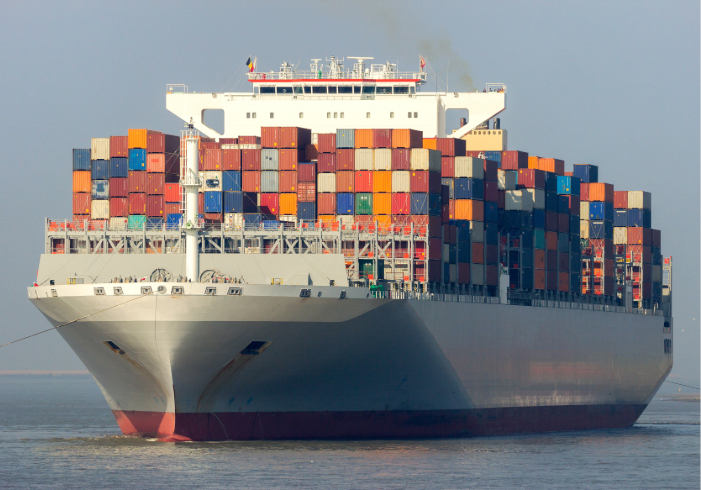
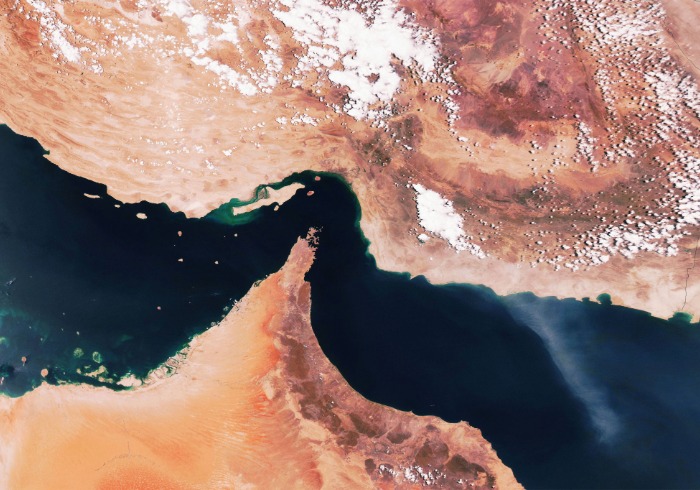
Force majeure notices are moving through commodity trading chains at speed. Tanker hesitancy, war-risk insurance costs, sanctions exposure and uncertainty over the Strait of Hormuz have placed oil, LNG and petrochemical supply chains under extraordinary pressure. Even refined product streams in Asia are feeling the ripple effects of constrained crude availability and falling inventories, with the inevitable force majeure declarations.
Most parties receiving those notices are focused on the wrong question of whether there is disruption caused by the conflict. The harder and more decisive question is whether the conflict actually prevented performance of the specific contract in question, or whether supply was instead selectively redirected elsewhere.
The real issue might be allocation, not availability
When supply tightens, traders and producers make difficult commercial calls quickly. Vessels and cargoes become scarce, and operational flexibility shrinks. Decisions get made on calls and over messaging apps, often within hours.
In practice, this means prioritisation. Long-standing counterparties keep receiving cargoes. Strategic relationships are protected. Higher-margin buyers or downstream affiliates stay supplied. Others get a force majeure notice.
From a trading perspective, this might be rational portfolio management. From a legal perspective, however, it is where many force majeure arguments begin to unravel.
Arbitration tribunals do not simply ask whether disruption occurred. They ask whether performance of this contract was genuinely prevented. If cargoes continued moving to preferred counterparties while others were told delivery was impossible, demonstrating that all-important causative link between the disruption and non-performance becomes very difficult. The most damaging documents in these disputes are rarely the force majeure notices themselves. They are the internal allocation records, vessel schedules and trading communications showing exactly where limited molecules actually went – evidence which may betray the force majeure posture adopted.
The reflexive adoption risk
This issue becomes particularly acute in the structures commodity traders actually operate in.
A single cargo can involve an upstream producer, a free-on-board sale, multiple intermediate traders, a charter party, storage and a downstream refinery obligation. When the upstream supplier declares force majeure, intermediate traders often adopt the same position without stopping to ask whether their own specific obligations were genuinely prevented.
That reflexive adoption is a significant legal risk.
A trader can claim no cargo was available for delivery while simultaneously performing under parallel contracts. A supplier can argue vessel availability collapsed while cargoes continued moving to selected customers under revised commercial terms. More acutely, in oil trading chains, a seller passing on a force majeure notice from a Middle East supplier might, at the same time, be a buyer contesting a similar force majeure notice for another oil trade from the Middle East. These inconsistencies surface in arbitration disclosure. When they do, the party invoking force majeure faces a causation gap they might struggle to close.
The slippery slope of selective performance
Many force majeure clauses say nothing about how available supply should be allocated during a shortage. That silence becomes the dispute.
If you distributed scarce cargoes selectively and a counterparty later argues you could have performed their contract but chose not to, you will need to show that your allocation process was consistent, rational and applied without discrimination across your book. In many cases, parties cannot show this because the decisions were made quickly, informally and without documentation.
Freight costs are not force majeure
A related issue is the ship owner’s reluctance to enter high-risk regions. Many tanker owners have legitimate grounds to refuse voyages into war-risk zones. But legitimate reasons for non-performance under a charterparty do not neatly transpose onto trading contracts, where increased freight costs or operational inconvenience would not ordinarily constitute force majeure.
If alternative vessels were available, even at substantially higher cost, a tribunal is likely to find that performance remained possible, thereby defeating an assertion of force majeure with the well-settled position that a more expensive contract does not in itself justify force majeure.
This distinction matters most where a party simultaneously invokes force majeure while continuing shipments elsewhere in its portfolio under revised pricing. That combination of conduct is very hard to reconcile with a genuine impossibility argument.
Hedging losses – the second layer of losses
Market participants are facing substantial losses not just from non-performance of physical deliveries but also from hedging positions left naked when a physical contract collapses. Those losses are potentially recoverable but recovery depends heavily on what you can show about the connection between the hedge and the affected contract, whether close-out decisions were reasonable, and how quickly you moved to mitigate following disruption.
The practical consequence is that the decisions made in the first days after a force majeure declaration often become the most consequential. Acting quickly is not enough. Acting quickly and documenting why you did what you did is what protects you later.
Navigating the dispute landscape: Force majeure and arbitration
In the disputes ahead, success turns not only on the strength of your force majeure clause but on how effectively you prepare for arbitration. Tribunals expect a clear, documented causal link between the event and your specific non-performance. They scrutinise allocation decisions, internal communications and mitigation efforts with forensic detail.
At our firm, we combine deep expertise in commodity trading mechanics with specialist international arbitration practice. We help clients stress-test force majeure claims before they are issued, assist in building contemporaneous records that withstand disclosure, craft compelling causation narratives and, where necessary, vigorously pursue or defend claims for damages in arbitration.
What traders should do now
If you have open force majeure positions, whether you are the party invoking force majeure or receiving a notice, there are several things worth doing immediately.
- Map your exposure across your book. Identify every contract with an open force majeure notice and cross-check it against what is actually moving in your portfolio. Inconsistencies between what you are claiming and what you are doing are your biggest legal risk.
- Document every allocation decision now. Even informal decisions relating to cargo substitutions, re-routing calls and pricing adjustments should be recorded with a brief note of the reasoning at the time.
- Check your notices for strict compliance. Most force majeure clauses contain specific notification requirements: timing, form, content. Non-compliance can invalidate an otherwise legitimate claim before the merits are ever reached.
- Review your hedging positions actively. If physical contracts are collapsing, do not leave derivative positions unmanaged. Decisions made now about close-outs will be examined closely if losses become the subject of a claim.
- Apply your allocation criteria consistently. If you are continuing to supply some counterparties and not others, make sure you can articulate a principled basis for that distinction and that it is being applied consistently. Inconsistency is the single most damaging fact pattern in selective performance disputes.
- Stress-test your position for arbitration. Review your evidence with counsel experienced in both trading operations and arbitral procedure. As I have said on many occasions, “minutes of care are better than hours of repair.”
Our helpful Force Majeure War Map at this link, can help traders or legal teams navigate the key considerations in respect of force majeure claims arising from the conflict.
The disputes emerging from this conflict will not primarily be about whether disruption occurred. That is not seriously in question. They will be about what you did with the supply you had, who you chose to supply, and whether you can show that those decisions were principled, consistent and properly documented.
The parties best placed to defend those claims are the ones building that record now.
Baldev Bhinder is the managing director of Blackstone & Gold, a Singapore-based law firm specialising in trade and commodity disputes. He can be reached at baldevbhinder@blackstonegold.com