
Georgia’s Kulevi Oil Refinery has said it is committed to complying with EU and other applicable regulatory frameworks and will cooperate with authorities, after the bloc announced sanctions targeting its exports.
The European Council said on July 23 it planned to impose a transaction ban on EU companies engaging with the Kulevi refinery, effective from January, due to its trading and processing of Russian oil.
The Centre for Research on Energy and Clean Air (CREA), an energy think tank headquartered in Helsinki, has previously said EU and US ports unloaded shipments of Kulevi fuel that was produced using Russian crude, including some after the EU introduced a ban on importing such products in January this year.
When contacted by GTR, a spokesperson for the Kulevi Oil Refinery said: “We maintain internal compliance procedures and expect our counterparties and business partners to adhere to applicable laws and regulations.”
The refinery “take[s] compliance matters very seriously” and is working to ensure it is aligned with relevant regulatory frameworks in jurisdictions where it operates, including the EU, they said.
The spokesperson added they were unable to comment on ongoing matters or third-party reports, but said the refinery is “committed to cooperating with the appropriate authorities where required and to conducting our business responsibly and transparently”.
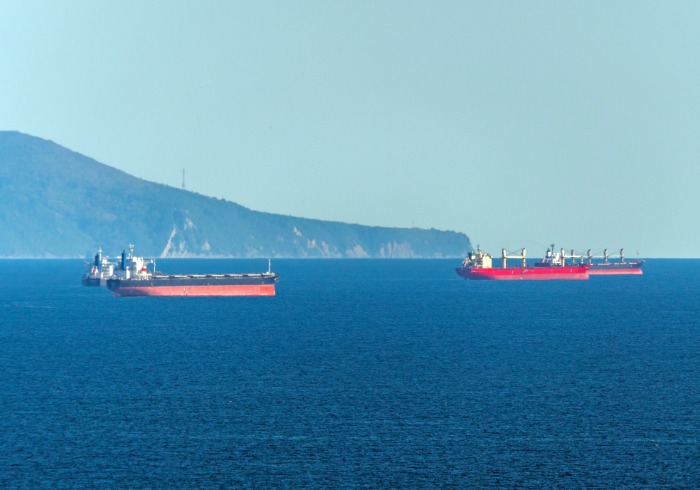
Kulevi Oil Refinery, which is connected by pipeline to the Kulevi port on Georgia’s Black Sea coast, became fully operational as a producer of fuel oil, diesel and naphtha in October last year.
CREA has said the refinery sources all of its crude feedstock from Russia, meaning that since January’s reforms, EU importers should have been prohibited from unloading Kulevi-produced fuel cargoes domestically.
However, the organisation said in March that a cargo of diesel from Kulevi port had been delivered to Burgas in Bulgaria, and the following month identified another shipment, this time to Cyprus.
The refinery’s operating company, Black Sea Petroleum, had already signalled plans to transition to Turkmenistan and Kazakhstan-origin crude oil before the EU’s sanctions decision.
The company issued a statement on July 1 saying it would “begin refining crude oil of entirely non-Russian origin” as early as August this year.
“This will open doors to high-margin markets for products manufactured by Black Sea Petroleum,” it said, adding it had expanded a partnership with technology firm Honeywell covering procurement and automated control systems.
The European Commission is due to review the incoming restrictions in October. Law firm Eversheds Sutherland said this provision suggests that “if Kulevi severs its ties to Russian energy supplies, the transaction ban may be lifted”.
Meanwhile, following the EU announcement, Georgia’s Foreign Ministry issued a statement saying the country “fully observes” the bloc’s sanctions regime, and said information provided by Georgian authorities showed there were no grounds for imposing sanctions.
The action comes as CREA continues to warn Russian-origin fuel products are reaching markets that have imposed sanctions on the country.
It said in a report published last week that in the last three years, Georgia’s Kulevi and Batumi ports have exported fuel worth €1.2bn – suspected of being produced using Russian crude – to ports in Europe and the US.
It said cargoes worth €811mn were shipped from the Kulevi port, a “significant proportion” of which were likely processed at the Kulevi Oil Refinery, to buyers in the EU and US.
Over the same period, the nearby port of Batumi exported diesel to the EU and UK worth €339mn – more than nine times the volume of non-Russian crude it imported.
CREA suggested that authorities “ban imports of oil products or petrochemicals from ports that have received a shipment of Russian crude or refined fuels in the prior six months”.
“Sanctions must also ban the importation of oil products or petrochemicals from ports with a feasible connection to a pipeline or railway that connects to a refinery that runs on Russian oil,” it said.