
The operator of two Nord Stream gas pipelines that were damaged in 2022 under still-unexplained circumstances has failed in its bid to recover up to €580mn from a group of insurers.
Nord Stream AG, a Switzerland-headquartered joint venture that is majority owned by Russia’s Gazprom, filed a lawsuit in 2024 against Lloyd’s of London and Arch Insurance, which each also represented a group of other insurers.
The company had pursued an insurance claim after both Nord Stream 1 pipelines were seriously damaged by explosions in September 2022, but the insurers said the damage was not covered by their policies because it was caused by the war between Russia and Ukraine, which started seven months earlier.
London’s High Court ruled last week that the insurers were right not to pay out the claim. Nord Stream’s insurance policies excluded “damage directly or indirectly occasioned by, happening through, or in consequences of war”, and the court found that was the case regardless of who caused the explosions.
Nord Stream had argued the insurers would have to prove the act of sabotage had a causal connection of “real significance” to the Russia-Ukraine war, which would not be possible because no state or group has claimed responsibility.
As a result, the court turned to expert witnesses to identify the most likely perpetrators – narrowed down to the US, Russia, the Ukrainian government or a Ukrainian sub-state actor – and examined whether each outcome would support a connection to the war.
It found that if Ukraine had carried out the pipeline attack, it had a “strategic reason” to do so – to deter Russia or halt its military activity – meaning the war would have been a “significant cause of its actions”.
Another possibility considered by the court was that the attack was carried out by a group of soldiers and civilian Ukrainians who rented a yacht, overseen by the head of the country’s armed forces but without the involvement of the government.
German authorities have pursued this possibility, this month charging a Ukrainian individual with co-perpetrating the attack.
In that scenario, the court found the act of sabotage would be indirectly caused by the war, because it “permits or even encourages those acts”.
If Russia had caused the pipeline explosions – which experts said could have been an effort to change Germany’s stance on supporting Ukraine – the judgment said the war would have been a significant cause, as there would have been no such motive before the war.
And in the US scenario, Nord Stream argued the country had long opposed the pipelines and had reportedly drawn up plans to sabotage them before Russia’s 2022 full-scale invasion.
But the court found that even if plans existed before then, the decision to carry them out would mean the war was a significant cause of its actions.
The court did not speculate as to which theory was the most likely.
Other arguments put forward by Nord Stream, including that other Lloyd’s war clauses would cover the damage to the pipelines, were also rejected.
Law firm Herbert Smith Freehills Kramer, which represented Nord Stream in the case, said in an analysis the judgment “will be of interest to policyholders with war exclusions in their policies, as well as brokers, particularly in respect of war exclusions which contain ‘indirect’ causation language”.
“These issues are likely to remain relevant to policyholders in the current geopolitical climate, particularly given the on-going conflict in Ukraine and the conflict this year in the Middle East,” it said.
An analysis by Mishcon de Reya said policyholders should be alert to language that “loosens” the causal connection between loss and excluded damage, which would effectively “narrow the scope of cover available”.
Nord Stream, Lloyd’s and Arch did not comment when contacted by GTR.
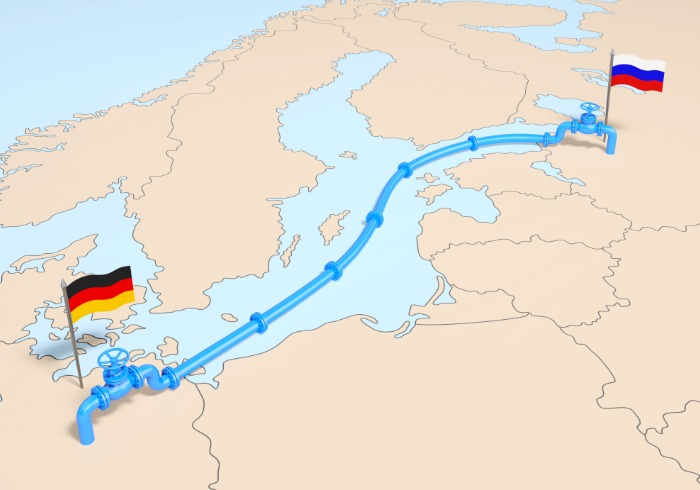
The two Nord Stream 1 pipelines damaged in the attack, which run between north-west Russia and Germany, remain non-operational.
One of the two Nord Stream 2 pipelines, which are operated by a different Swiss company and ultimately wholly owned by Gazprom, was also sabotaged in 2022. However, Nord Stream 2 was never used to transport gas after the German government halted its certification.