

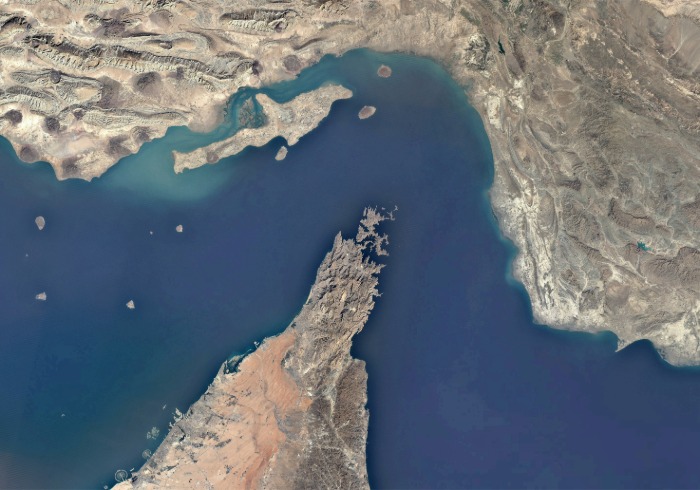
Commodity price volatility caused by the Strait of Hormuz crisis could have widespread effects for traders and their banks, further concentrating financing within the larger end of the market, experts have said.
Commercial traffic through the strait remains at a near-standstill, according to maritime intelligence company Windward. Though some vessels appear to have been permitted passage, mainly those linked to China, the number of crossings has averaged just 2.4 per day on a rolling seven-day basis.
The resulting upheaval to the region’s crude exports, described by the International Energy Agency last week as “the largest supply disruption in the history of the global oil market”, has resulted in dramatic price spikes and volatility.
The strait also usually carries huge volumes of refined oil products and LNG, as well as a third of seaborne fertiliser trade, UN Trade and Development said last week. Further cost concerns come from “surging” freight rates, insurance premiums and fuel costs, it said.
“This all means it is costing a lot more to move the same cargoes, and so traders have to go to the market to supplement their facilities – simply to be able to discharge their existing obligations, let alone servicing their growth needs,” said Sumeet Malhotra, head of the commodities and international trade practice at Singapore law firm WFW.
“There is a fundamental shift in the economics of commodity trading, and if prices are going up across the board, it means trades that were in the money a week ago are no longer in the money.”
Large commodity traders have already started tailoring their financing facilities to ensure they are prepared for the resulting turmoil.
Trafigura announced last week it had secured a US$3bn contingent revolving credit facility to supplement existing bank lines, designed to prove a “liquidity buffer, if required during a period of heightened commodity price volatility”.
Bloomberg reported that Vitol and Gunvor were also in talks to raise US$3bn and US$1bn in credit, respectively.
The ability of commodity trading giants to continue expanding credit lines is in part a reflection of their increasing strategic importance, as their deep market knowledge and strong liquidity allow them to ensure ongoing supply to buyers despite geopolitical uncertainty.
Additional credit lines mean traders can brace for margin calls in the event of upwards swings in the futures markets, said Jean-François Lambert, founder and managing partner of Lambert Commodities.
“Everyone is rushing to secure backup lines,” he said. “You need liquidity, and your existing lines are going to be used more actively because of the sheer value of the commodities you’re trading. So you need to have facilities you’re not going to touch unless you have to come up with hefty margin calls.”
These facilities are likely also good news for commodity finance lenders, many of which experienced a “year of frustration” in 2025 due to relatively low utilisation of credit lines, Lambert said.
However, the situation could exacerbate problems faced by smaller traders, many of which have found access to finance limited in recent years amid a so-called flight to quality.
“If you’re a bank in this environment, you’re going to focus on those large established traders, and the intermediate and smaller traders could be iced out of the trade finance market,” WFW’s Malhotra said.
“This could cause a shock to those smaller traders that might not be able to expand or renew their facilities, particularly if they were already banking on those facilities to manage their obligations.”
Lambert said he did not expect banks to withdraw from providing financing to smaller traders, but that traders taking aggressive positions in the market “could trigger the opposite reaction” and appear more risky to potential lenders.
For Malhotra, some smaller traders have already recognised that current financing facilities will not be adequate to manage their positions and are “consolidating their battle chest”.
“Traders that can manage their finance positions and trade their way out of this have a massive competitive advantage. If you’re making a loss on a transaction, by definition there is somebody else in the market that is making a profit on that same transaction,” he said.
“But for those that are caught flat footed, lenders and trade credit underwriters may need to brace themselves for defaults.”