
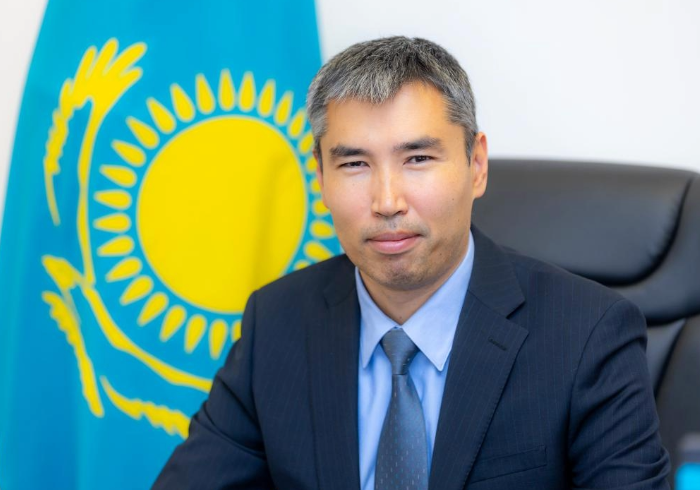
For Kazakhstan, the Middle Corridor is no longer simply an alternative to disrupted maritime routes but a long-term “strategic” trade corridor linking Europe and Asia, according to the country’s vice-minister of trade and integration, Aset Nusupov.
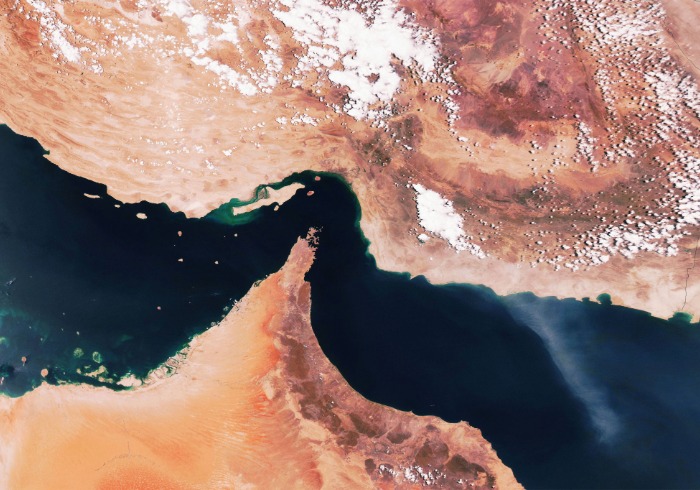
Nusupov told GTR the country is continuing to expand the infrastructure supporting the Trans-Caspian International Transport Route linking Europe to Asia – also known as the Middle Corridor – which has gained prominence as shippers sought alternatives to the Red Sea and, more recently, navigated uncertainty around the Strait of Hormuz.
“Reliability has become the new currency of logistics. Many companies today prefer to pay a bit more just to have a guarantee that their goods will arrive on time and without unexpected delays or political risk along the route,” Nusupov said.
“Kazakhstan is located in the heart of Eurasia and we would very much like to strengthen our mutually beneficial ties with other countries. That’s a strategic choice we’ve made.
“We position ourselves as a middle power, and we don’t build walls, we build bridges. Our goal is to be more than just a transit country – we want to be a real hub for trade, production and innovation,” he added.
The corridor has seen substantial volume growth in recent years, and World Bank and KPMG projections estimate that freight volumes could triple by 2030 to reach around 11 million tonnes per year.
To meet that expected demand, Kazakhstan has been ramping up its infrastructure ambitions across the Middle Corridor.
Ongoing infrastructure investments include the launch of a second railway line between Dostyk and Moiynty, expected to increase freight capacity fivefold, expansion of the container hub at Kuryk port, and modernisation of the Dostyk and Khorgos border crossings.
Nusopov argued the route’s long-term appeal extends beyond the current supply chain disruptions, identifying infrastructure investment, growing foreign interest and Kazakhstan’s neutral geopolitical stance as factors underpinning its future.
He pointed to China, which he said was “not just sending freight through the corridor, they’re investing in the infrastructure itself. When you see that, you know it isn’t a short-term play.”
To help growing trade flows become more efficient, Kazakhstan is also investing in digitalisation. Its Smart Cargo platform, a joint initiative between the Ministry of Transport and the Ministry of Finance, is piloting the integration of customs clearance, cargo monitoring, documentation and licensing into a single digital ecosystem.
Nusupov said digital trade efforts had already helped reduce cross-Kazakhstan transit times from 14-19 days to around five days.
“Our principle is simple: data should move as freely as goods,” he said, adding that a complementary initiative, Cartis – the Central Asia Regional Trade Information System – is in development to harmonise trade data flows across institutions in the region.
Middle Corridor financing
The vice-minister told GTR Kazakhstan’s approach to funding large-scale projects along the route is deliberately “balanced”, pointing to a financing model that blends multilateral guarantees with commercial lending.
“It’s not a story of multilateral financing being replaced by commercial funding – it’s about building a balanced model where development institution participation strengthens project credibility and resilience, while commercial financing expands the total volume of available capital.”
He noted the Almaty Bypass Project, a key node on the corridor, where Standard Chartered is providing commercial lending backed by a Miga guarantee to the Kazakhstan Temir Zholy (KTZ), the national railway operator.
According to Nusopov, this blended arrangement has become a template for KTZ as it pursues a pipeline of infrastructure upgrades along the route, according to Nusupov.
The railway operator is already drawing on export credit from the Export-Import Bank of the US and Bpifrance, while the European Bank for Reconstruction and Development has also committed financing for the construction of berths at Aktau Sea Port, a critical Caspian node.
On commercial financing appetite, Nusupov said it largely “comes down to the cost of money”.
“If the money is cheap, we take it. Whoever provides the better rate, that is our partner in the project.”