
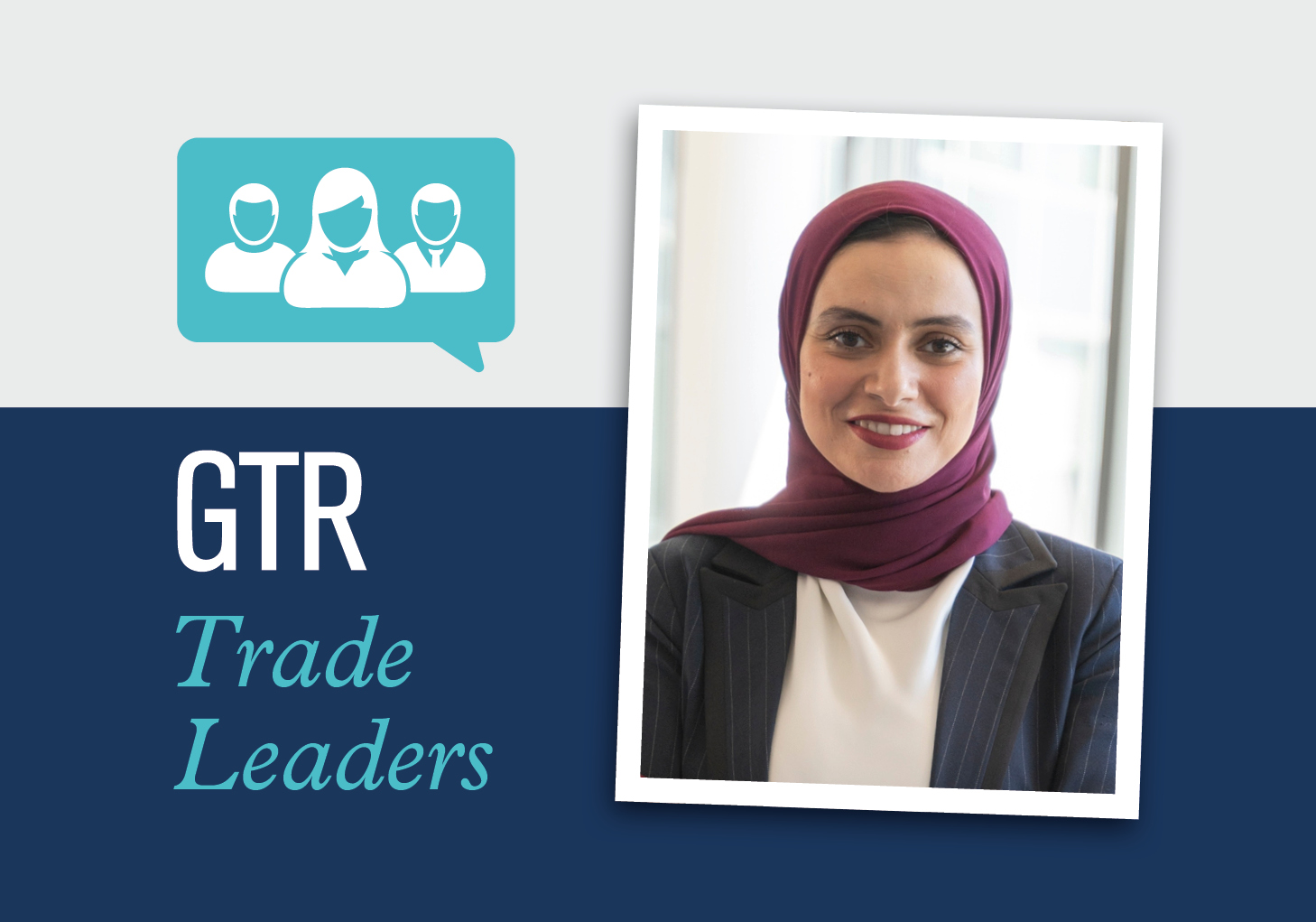
Norhan Ezzat, newly appointed head of transaction banking at Bank of Sharjah, is tasked with building the lender’s global transaction banking franchise from the ground up.
With more than 15 years’ experience across cash management, trade finance, digital payments and Islamic finance in the Middle East and North Africa, she has built and scaled transaction banking offerings and led major digital transformation programmes at Arab African International Bank, Abu Dhabi Islamic Bank and Standard Chartered.
Speaking to GTR on the sidelines of GTR Mena in Dubai, she outlines why now is the right moment to build the business, how she is structuring the team and product set, and what she’s learned building both conventional and Islamic transaction banking across the region.
GTR: You’ve joined Bank of Sharjah to build its transaction banking franchise. Why was this the right move for you – and why now for the bank?
Ezzat: This is the second time I’m building transaction banking from scratch, and the third time overall in terms of transaction banking transformation. I like building franchises. It comes with its own challenges. It is not an easy feat – it requires conviction and stamina. You’re given a blank piece of paper and told, ‘Write the rules.’ There’s no playbook.
When you establish something like this, senior management expects you to build for the long term while delivering quick wins. No board will wait two or three years without seeing value while they continue investing. You have to show results, whether through structured transactions, setting up new sectors or even just building the right commercial bundles for customers.
What I like is that I get to use both my technical knowledge in building systems and my commercial knowledge in setting up teams and structuring deals.
Bank of Sharjah is undergoing a major transformation. It has a strong legacy with its customers and is seeking growth across transaction banking, corporate banking and retail.
There are multiple areas where the bank is investing and looking to grow, so the potential is significant. Being part of that journey, and hopefully, two to five years down the line, being known as one of the contributors to that transformation – that’s what excites me.
GTR: How are you thinking about hiring and team structure?
Ezzat: I am building the entire team from scratch. One of the interesting aspects of building a franchise is finding the right talent – people who understand both product delivery and commercial discipline – and then also putting in place the right model. Can teams cover both cash management and trade at the same time, or should you split them? A lot of banks have played around with this concept for many years. The reality is it is very rare to find people who know both businesses from the product and the commercial angle. That’s why I’m building separate teams for cash management and trade.
What’s critical is ensuring both teams have the commercial discipline to drive revenue and client acquisition from day one. The primary agenda is building the product proposition and the platforms with a state-of-the-art client experience while having the right commercial sense to deliver the revenue potential the bank can achieve.
GTR: What will your product priorities be across both cash and trade?
Ezzat: The focus will be building the cash management proposition and revamping our digital platforms. I’m thinking about it as an end-to-end client experience – because when product capabilities are largely similar across banks, experience becomes the key differentiator.
Many banks have gone live with systems and then changed them years later. Others have built business squads to redesign the customer journey on top of legacy systems – I’ve done that as well. The advantage of starting now is that I’ve seen where execution typically breaks down. Some banks over-invest in front-end interfaces and neglect the back end. Others have strong systems but subpar client-facing experiences. You need both working together.
For cash management, it’s the full product suite: payments, collections and liquidity management. On trade finance, the starting point is digitising the journey within the bank – putting the right digital platform in place and, most importantly, fixing the process. Many banks have an amazing front end, but the internal process is so fragmented that it takes longer to submit online than to go to the branch. We have to fix both together.
I’m also looking at digital solutions for receivables and payables, but not necessarily building a full supply chain platform from scratch. Most banks over-engineer these platforms, and by the time they go live, the market has moved.
So I’m rethinking the model. From my experience, supply chain works best with as little friction as possible. If you approach a client who has never used supply chain finance at scale, it’s counterintuitive for them to log into a separate platform just to upload invoices and accept financing. The ideal model is to integrate financing into their normal procurement cycle, either through a white-label solution or a partnership, with less infrastructure to build, faster time-to-market and better client experience.
GTR: You also have previous experience in Islamic transaction banking – what do you see as the biggest misunderstandings and opportunities in that space?
Ezzat: The biggest misunderstanding is that you only opt for Islamic banking out of personal conviction. Most customers think, ‘I’m already banking in a certain way – why would I shift unless I personally prefer it?’
But having worked in Islamic transaction banking in both multinational and regional banks, I’ve realised there are structural advantages – especially in transaction banking – that can actually make it better than conventional.
First, many Islamic structures are ownership-based. Take inventory financing as an example. If a client is seeking off-balance sheet treatment, the bank actually buys the goods and holds ownership. From a legal and reporting perspective, that’s very clear. It’s not just collateral being securitised – it’s the bank’s asset. Once structured properly, and many Islamic banks have done this, it can be stronger than the conventional alternative for asset-backed financing.
Second, it’s a diversification tool. Many Islamic institutions, particularly in OIC and Gulf countries, operate with abundant liquidity. A large portion of depositors are not necessarily seeking high returns, which often translates into a lower cost of funds. For a corporate client, that can mean more sustainable and often cheaper financing, plus diversification of funding sources.
I’ve worked with clients who had no religious motivation at all. They chose Islamic simply to diversify – alongside conventional banks and multilaterals.
So the opportunity is this: Islamic finance has structural, legal and funding advantages that can make it genuinely compelling beyond personal conviction. That’s the part that’s still not widely understood.
GTR: What has shaped you as a leader?
Ezzat: One key thing every leader needs is the right sponsorship. Some people make it happen; others wait. You have to find a leader you respect and believe in, and prove to them you can deliver. That’s what gives them the confidence to back you and say, ‘I trust this person.’
I’ve been fortunate to have strong sponsors throughout my career. But sponsorship alone is not enough, it’s also about taking calculated risks.
Some leaders stay in one organisation for 15 or 20 years and grow with it. That’s one successful model. Another is taking on roles where you’re handed a blank page and told to build. That comes with uncertainty and the possibility of failure, but the upside is significant if you succeed. You have to be comfortable with that balance.
The market is also changing. Transaction banking leadership increasingly requires fluency across fintech partnerships, digital transformation and embedded finance – not just traditional credit and operations. I followed a unique path, from treasury to corporate banking to transaction banking with digital transformation oversight, across Islamic and conventional. That gave me a full cross-functional view.
Transaction banking leaders could increasingly come from tech or consumer finance, bringing expertise in platforms, payments and embedded finance. The leaders who succeed in the next decade will bridge these worlds, not specialise in just one, and success will require leaders who can continuously adapt as the landscape evolves.
That’s why I focus on making my team better prepared for that reality, by mentoring graduates, creating rotation opportunities to give them cross-functional exposure and pushing them to step beyond their defined roles early in their careers.