

From ESG-driven innovation to Payment with Terms©, Orbian’s integrated approach is transforming working capital optimisation across global trade.
For over 25 years, Orbian has stood at the forefront of supply chain finance (SCF), pioneering solutions that empower corporates to optimise working capital while supporting suppliers across the globe. Founded in 1999 as a joint venture between Citibank and SAP, Orbian has evolved from a technology provider into a fully-fledged financial services firm, now privately held and operating in over 50 countries.
In an era marked by economic volatility, regulatory shifts and back-to-normal interest rates, Orbian’s commitment to innovation has never been more critical. Its latest offering, Payment with Terms, is a testament to this ethos, providing buyers with a faster, more flexible way to manage liquidity while complementing traditional SCF programmes.
A new chapter: Payment with Terms©
While SCF remains a vital tool for buyers and suppliers alike, it’s not without limitations. Onboarding suppliers can be complex and time-consuming, and the benefits to buyers may take months to materialise. Recognising these challenges, Orbian introduced Payment with Terms©– a solution designed to offer immediate working capital benefits without requiring supplier participation.
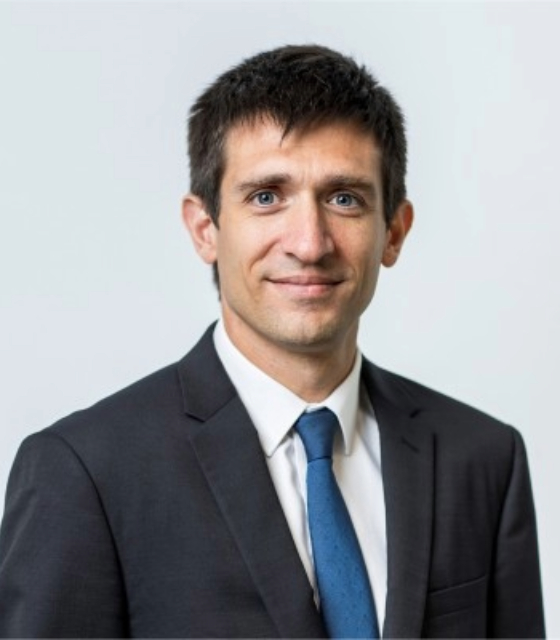
“When a buyer of goods and services needs to pay a supplier on a specific due date, we can now do so on their behalf,” explains Markus Schiffers, managing director at Orbian. “Once paid, we offer the buyer a payment term independent from and in addition to the supplier’s terms, therefore protecting the buyer’s liquidity and improving their working capital.”
“The financing we offer will always be cheaper than the discount earned.”
Markus Schiffers, Orbian’s managing director
For instance, if a supplier offers a 60-day payment term, Orbian pays the supplier on the due date and invoices the buyer, with a payment term of, let’s say, 90 days. This effectively gives the buyer 150 days to settle the invoice, enhancing cash flow without disrupting supplier relationships.
Payment with Terms© also enables buyers to capture early payment discounts. “If a supplier offers a 2% discount for payment within 10 days, we can pay early on the buyer’s behalf and provide a further 50 days for repayment,” Schiffers adds. “The financing we offer will always be cheaper than the discount earned.”
Flexibility for SMEs and regulatory resilience
One of Payment with Terms© standout features is its accessibility for smaller buyers. Traditional SCF programmes often require a minimum size and depend on supplier onboarding. It removes this barrier, allowing buyers to decide how many suppliers participate, without needing supplier consent.
This flexibility is valuable as a mitigant, especially in light of drastic changes in the landscape, such as the sudden increase in tariffs or regulations like the EU’s proposed late payment regulation, which could have capped payment terms at 30 to 60 days. In such cases, SCF may not be viable, but Payment with Terms© offers a compliant alternative that preserves the liquidity and operational cash flow of the buyer.
Jurisdictional nuances also play a role. “In France, you can’t extend supplier terms beyond 60 days, making Payment with Terms© ideal,” Schiffers notes. “In Italy, where suppliers may offer up to 180 days, SCF might be more suitable. But it’s never an either/or scenario.”
One platform, two solutions: SCF and Flex Pay
What sets Orbian apart is its ability to offer Payment with Terms© and SCF within a single, unified programme. As such, Orbian introduced its “Flex Pay” product – a Payment with Terms© solution that can be combined with supply chain finance in one single programme. This eliminates the need for multiple providers, integrations and account statements, streamlining operations for buyers that require more than one funding partner or with more complex global structures.
“Typically, a buyer would need to engage two different providers and navigate the associated complexities,” says Schiffers. “But with Orbian, both solutions run on the same platform with identical technical requirements. It’s one integration, one statement, one process.”
This integrated approach allows buyers to start with Flex Pay for immediate impact, while gradually onboarding suppliers into SCF. As procurement teams negotiate longer payment terms, suppliers can be transitioned from Flex Pay to SCF, where they bear the financing costs.
This hybrid model accelerates working capital improvements without long-term cost burdens. Flex Pay is solely managed by treasury and is the fastest and most predictable working capital solution. There is no need to involve procurement at all.
Schiffers explains: “With procurement’s involvement and by combining Flex Pay with SCF, the working capital improvement becomes more cost-efficient, resulting in the fastest and most affordable solution in the market.”
AI-driven allocation: Smarter supplier segmentation without the complexity
To further streamline working capital optimisation, Orbian has introduced an AI-powered allocation engine that intelligently segments suppliers between Flex Pay and SCF. This tool analyses supplier behaviour, payment history and liquidity needs to determine the most suitable financing method, without requiring manual input from buyers or suppliers.
The system ensures that suppliers who benefit most from early payment are automatically routed to SCF, where they bear the financing cost. Meanwhile, suppliers with a lower likelihood of accepting an SCF offer are allocated to Flex Pay, allowing buyers to extend payment terms without disrupting supplier relationships. This dynamic allocation maximises efficiency and cost-effectiveness, enabling buyers to achieve optimal working capital outcomes with minimal operational overhead.
A legacy of innovation and research
Orbian’s leadership in SCF is underpinned by a deep commitment to research and behavioural understanding. “We’ve had an enduring partnership with the Technical University of Munich for nearly 15 years,” says Thomas Dunn, chairman of Orbian. “Now we’re collaborating with several US institutions to explore cognitive bias and other behavioural factors in SCF.”
“Our approach ensures that community-based, minority-owned businesses are supported just as effectively as large corporates.”
Thomas Dunn, Orbian chairman
These insights inform Orbian’s product development and risk management protocols, enabling the company to offer unique tools such as fixed interest rate management and Express SCF via e-money. The latter allows even the smallest suppliers – often overlooked by banks – to benefit from early payment and liquidity, supporting ESG goals and supply chain resilience.
“Our approach ensures that community-based, minority-owned businesses are supported just as effectively as large corporates,” Dunn explains. “This contributes to supply chain security and aligns with our clients’ ESG strategies.”
Looking ahead: The future of SCF
As the SCF landscape evolves, Dunn predicts a shift in funding dynamics. “Insurance companies and investment management firms with multi-strategy hedge fund offerings will become the majority funders of SCF programmes with non-investment grade buyers within five years,” he says.
With SCF offering attractive returns and minimal losses, it’s a compelling asset class. Orbian is already seeing increased participation from such firms purchasing its funding notes or providing funding through risk participations – further diversifying its funding base and enhancing programme stability.
Strategic expansion: Orbian acquires Roger
In a move that underscores its commitment to regional expansion and product diversification, Orbian has acquired Roger, the largest Czech fintech specialising in receivables and supply chain financing. Based in Brno, Roger has built a strong reputation for serving SMEs and large corporates alike, with a particular dominance in the e-commerce sector – holding over 60% market share.
The acquisition enables Orbian to extend its reach across receivables and payables financing, leveraging Roger’s local expertise and client relationships.
This strategic acquisition not only strengthens Orbian’s position in a key European market but also reinforces its vision of delivering end-to-end working capital solutions through both organic innovation and targeted partnerships.
Conclusion: A vision for end-to-end optimisation
Orbian’s ultimate goal is to transform SCF from a relatively niche financial tool into a comprehensive working capital optimisation platform. In this future, buyers and suppliers will have full control over when and how they make and receive payments – tailored to their individual liquidity needs.
“Success means enabling flexibility,” Dunn says. “Suppliers should be able to choose accelerated payments only when needed. Buyers should be able to defer or pay early based on their priorities. That’s the innovation we’re striving for.”
With Flex Pay and SCF now seamlessly integrated and funding diversification, Orbian is not just responding to change – it’s shaping the future of global trade finance. “We will continue our efforts to evolve SCF to an end-to-end working capital optimisation tool. This is at the heart of the innovation that Orbian is striving to achieve, which we pursue both organically and through acquisitions when necessary,” Dunn concludes.