


Each year, GTR carefully selects the market’s Best Deals from the past 12 months, based on submissions sent to the editorial team. These winning transactions showcase excellence across trade, commodities, supply chain and export finance, as well as digital innovation.
This year’s winners reflect many of the forces reshaping global trade: the rise of AI infrastructure and data centres, the push to digitise paper-heavy trade flows, growing investment in energy transition projects and increasingly sophisticated approaches to working capital and liquidity management. The field was particularly competitive in export finance, with strong submissions linked to rail, energy and industrial decarbonisation projects.
Congratulations to those behind these winning transactions, recognised as some of the standout deals of 2025.
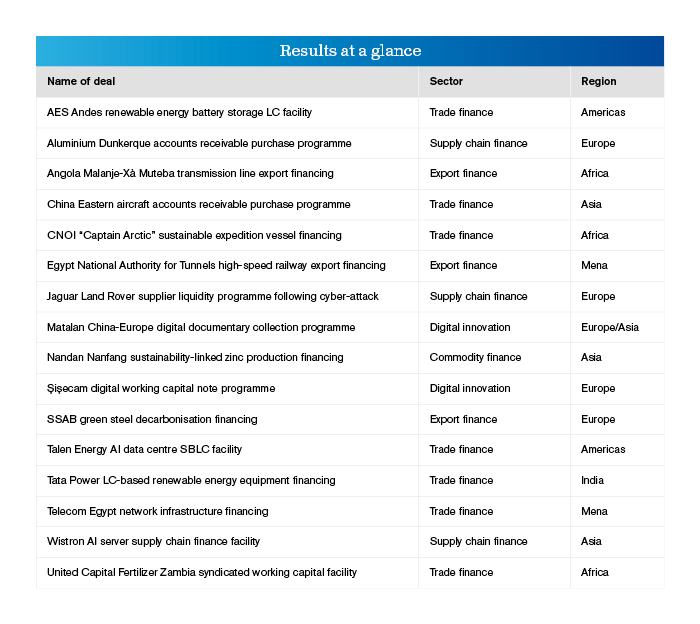
AES Andes renewable energy battery storage LC facility
Aluminium Dunkerque accounts receivable purchase programme
Angola Malanje-Xà Muteba transmission line export financing
China Eastern aircraft accounts receivable purchase programme
CNOI “Captain Arctic” sustainable expedition vessel financing
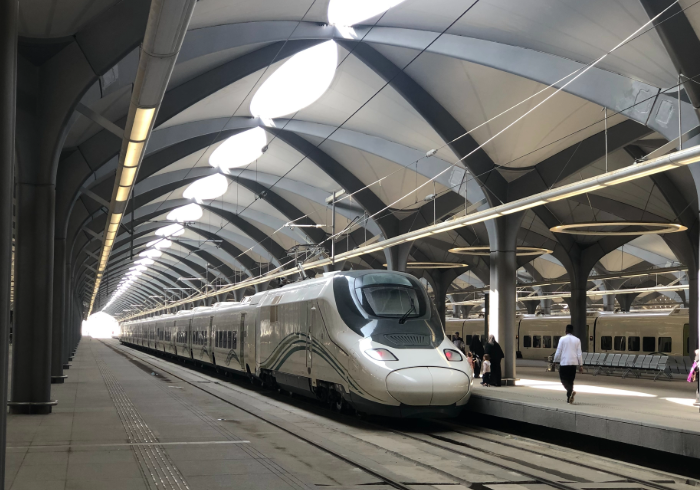
Egypt National Authority for Tunnels high-speed railway export financing
Jaguar Land Rover supplier liquidity programme following cyber-attack
Matalan China-Europe digital documentary collection programme
Nandan Nanfang sustainability-linked zinc production financing
Şişecam digital working capital note programme
SSAB green steel decarbonisation financing
Talen Energy AI data centre SBLC facility
Tata Power LC-based renewable energy equipment financing
Telecom Egypt network infrastructure financing
Wistron AI server supply chain finance facility
United Capital Fertilizer Zambia syndicated working capital facility
LCs support battery storage imports in Chile
- Deal name: AES Andes renewable energy battery storage LC facility
- Borrower: AES Andes
- Amount: aggregate of ~US$200mn in equipment imports related to three renewable energy projects
- Lender: SMBC
- Tenor: Up to 120 days
- Date signed: April 2025
In this winning deal, SMBC supported three landmark renewable energy projects in Chile with deferred payment letters of credit, helping finance the import of critical battery storage equipment for one of the country’s largest clean energy programmes.
AES Andes, the Chile-based subsidiary of US utility and power generation company AES Corporation, has focused on growing its renewable portfolio in recent years.
Under this deal, SMBC provided letters of credit that supported three cornerstone projects within the AES Pacífico Renewable Portfolio.
These include the Arenales or Punta del Sol project, a photovoltaic (PV) park that will provide up to 300MW or three hours of power in a standalone battery energy storage system (BESS) for Chile’s National Electric System.
It also covers Cristales, a 287MW solar PV farm along with a 340MW/four-hour BESS, and Pampas, a hybrid facility that combines 230MW solar power, 128MW wind power and a 340MW/four-hour BESS, together representing a major expansion of Chile’s renewable and storage capacity.
The letters of credit enabled suppliers to receive payment from SMBC when the goods were shipped, while the buyers could defer payment for up to 120 days, supporting complex cross-border procurement while easing pressure on working capital during construction.
SMBC arranged usance payable at sight letters of credit, which allowed buyers to import battery storage systems from the US and gave AES Andes more financial flexibility and better risk management, demonstrating how trade finance structures can play a pivotal role in large-scale energy transition projects.
SMBC led the project financing for the portfolio, which mobilised over US$1.2bn in total to finance the renewable infrastructure, pairing long-term project finance with tailored trade finance support across the supply chain.
The lender’s ability to structure further letter of credit facilities to support the supply chain “provided a comprehensive solution for the client”, SMBC says.
“This deal stands out as a landmark transaction in Chile’s energy transition journey, marking a significant step toward the country’s ambitious goal of achieving net zero emissions in its energy matrix by 2050,” SMBC says.
“The transaction’s success enhances Chile’s position as a leader in clean energy adoption [and] sets a replicable model for other markets.”
A holistic approach to working capital optimisation
- Deal name: Aluminium Dunkerque accounts receivable purchase programme
- Borrower: Aluminium Dunkerque SAS
- Amount: €100mn
- Lender: Banco Santander
- Tenor: 12 months
- Date signed: January 2025
Europe’s aluminium sector is under enormous pressure from energy costs and cheaper overseas imports, making efficient working capital management increasingly critical.
Santander showed in this deal how it could support the continent’s largest aluminium producer, France’s Aluminium Dunkerque, through a tailored accounts receivable purchase programme (ARP).
Aluminium Dunkerque operates a 65-hectare site, employing more than 700 people, and exports slabs and ingots to sectors including automotive, construction, transport and packaging.
Santander says the company had been devoting extensive time and resources to managing a complex range of credit insurance policies covering its sales contracts with customers.
The structure allowed Aluminium Dunkerque to simplify internal processes, reduce administrative complexity and free up resources to focus on its core industrial operations at a particularly challenging time for Europe’s metals sector.
In addition to the tailored liquidity support provided through the ARP, a key differentiator was Santander assuming responsibility for the administration of the company’s credit risk cover.
The bank’s submission describes the deal as groundbreaking “because it goes beyond traditional supply chain finance solutions” and involved working closely with insurers to put the facility in place.
“The customised structure combined immediate liquidity, integrated insurance management, and seamless execution into a single, scalable model,” the bank says.
The deal also had an interesting genesis, stemming from Santander’s relationship with American Industrial Partners (AIP), a private equity group that bought out Aluminium Dunkerque in 2021. As part of that deal, AIP and Santander discussed the company’s need for a tailor-made supply chain finance solution – talks that eventually resulted in the ARP programme.
Santander says the arrangement has unlocked significant cash, strengthened Aluminium Dunkerque’s financial position, and advanced AIP’s strategic priorities. Importantly, it also serves as a scalable model that the bank can replicate across the market, helping firms access liquidity while reducing the resource-intensive burden of insurance administration.
Powering Angola’s remote communities
- Deal name: Angola Malanje-Xà Muteba transmission line export financing
- Borrower: Ministry of Finance, Angola
- Amount: €352mn
- Mandated lead arranger (MLA), bookrunner, structuring bank and facility agent: Standard Chartered
- MLAs: Crédit Agricole CIB, Natixis
- Lead arranger: Citibank
- Export credit agency: Swiss Export Risk Insurance (Serv)
- Reinsurer: Etihad Credit Insurance (ECI)
- Law firms: Clifford Chance (lender legal counsel), Norton Rose Fulbright (borrower legal counsel)
- Tenor: 20 years
- Date signed: December 2025
Millions of Angolans still live without reliable electricity, dependent on isolated diesel generators that run intermittently, at high cost and with significant environmental consequences.
This €351mn Serv-backed financing is a direct response to that reality. Arranged by Standard Chartered for Angola’s Ministry of Finance, the proceeds will fund two major infrastructure projects aimed at strengthening and expanding the country’s electricity network.
The first is the construction of a 192km 400kV overhead transmission line connecting the new substations at Malanje and Xà Muteba in central Angola. The second is the expansion of the Fútila 60kV switchyard at the Malembo substation in Cabinda to accommodate new line and transformer bays. Together, the projects support Angola’s broader ambition of connecting remote communities to a national grid predominantly powered by hydroelectric energy.
The deal presented complex challenges. The two projects sit in geographically separate regions, each with a distinct environmental and social risk profile, requiring parallel, independently tailored environmental and social assessments aligned with international best practice.
In addition, the OECD Arrangement on Officially Supported Export Credits underwent modernisation midway through execution of the deal, allowing for longer tenors and more competitive pricing, while introducing stronger incentives for green and sustainable projects. Standard Chartered used the changes to the borrower’s advantage, successfully extending the tenor from 15 to 20 years, with ECA and lender approvals updated accordingly. The resulting financing structure directly supports Angola’s debt management strategy targets as agreed with the IMF and World Bank.
Perhaps most notably, this marks the first time Swiss ECA Serv has entered into a deal using ECI reinsurance, an arrangement requiring close coordination between the two agencies, the contractor and Standard Chartered.
“The project has strong social impact in Angola, safeguarded by a clear focus on environmental and social impact assessment, given the nature of the project,” Standard Chartered says. It notes that the two mobile generation units added to the Malembo substation – which currently sits off the main grid – will offer immediate, localised relief independent of the hydro-powered national grid the broader project connects to. A planned solar expansion at the same substation would further boost its capacity over time.
Easing the cash flow pressure in aircraft acquisition
- Deal name: China Eastern aircraft accounts receivable purchase programme
- Borrower: China Eastern Airlines International Financial Leasing Co. Ltd
- Amount: Rmb888mn
- Lender: DBS
- Tenor: 10 years
- Date signed: April 2025
Airlines are capital-intensive businesses, with aircraft acquisitions placing significant pressure on cash flows. This deal conceived by DBS shows how innovative structuring can reduce the impact of big-ticket purchases on an airline’s cash flow.
A leasing subsidiary of state-owned China Eastern Airlines, one of the country’s largest airlines by passenger numbers, approached DBS to ease the cash flow pressures from its acquisition of aircraft through an off-balance sheet structure. DBS has maintained a long-standing relationship with China Eastern, having previously supported its aircraft financing in Singapore.
What DBS proposed – and was ultimately mandated to do – was an accounts receivable purchase method using a special purpose vehicle. Over the course of a 10-year lease, DBS has enabled China Eastern to monetise future lease receivables upfront, while the bank assumes the associated risk exposure. The bank makes its margin through an interest rate applied to the programme.
DBS says this is an innovative approach compared to the more traditional method of aviation finance providers granting term loans, hinging the deal on lease instalments rather than the client’s balance sheet.
By transforming long-dated lease receivables into a more immediate source of liquidity, the structure provided the airline with additional financial flexibility while preserving balance sheet capacity for future growth.
The deal also dovetails into a growing trend in Asia by being structured entirely in domestic renminbi, avoiding foreign exchange risk.
“Re-solutioning a transaction classically addressed by term loans from specialist aircraft financiers into a multi-year structured accounts receivables purchase facility unlocks a broader source of trade liquidity for the client, providing China Eastern with greater confidence and flexibility to support fleet investment for its long-term growth,” says Terence Yong, DBS’ group head of sales for global transaction services.
Boosting sustainable shipbuilding in Mauritius
- Deal name: CNOI “Captain Arctic” sustainable expedition vessel financing
- Borrower: Chantier Naval de l’Océan Indien (CNOI)
- Amount: €35.3mn
- Participating bank: Mauritius Commercial Bank (MCB) (issued counter guarantee)
- Insurer: Atradius
- Broker: AU Group
- Tenor: 2 years
- Date signed: April 2025
This deal was notable for its innovative trade structuring, which used bank and insurance guarantees rather than traditional project financing.
Captain Arctic is an expedition vessel designed for polar exploration that claims to cut emissions by up to 90%, representing a big step forward in sustainable shipbuilding.
Built by Chantier Naval de l’Océan Indien (CNOI), a leading Mauritian shipyard, and developed by polar expedition company Selar and marine services firm Goltens, the ship can carry 36 passengers and 24 crew members. It aims to host scientists advancing climate research, while also giving policymakers, business leaders and other stakeholders first-hand exposure to the fragile polar environment in an effort to drive stronger climate action.
To help finance the building of the ship, Mauritius Commercial Bank (MCB) issued a counter-guarantee to Atradius in collaboration with AU Group, which then provided the advance payment guarantee to the beneficiary. The advance payments are used to procure raw materials and pay salaries to CNOI employees in Madagascar and Mauritius.
Selar was able to secure cheaper financing in France than in Mauritius, backed by the A-rated guarantee provided by Atradius.
By combining banking and insurance, the deal delivered more competitive pricing for the client and a saving of almost 40% in financing costs, MCB says. This is because the insurance market is not bound by the requirement to assess risk-weighted assets.
“This financing goes beyond a ship – it catalyses a new generation of sustainable trade finance in Mauritius and our African continent with a focus on the ‘S’ in ESG,” MCB says.
“Working with CNOI, we engineered a creative trade financing structure that aligned risk, insurance and ESG ambition – lowering barriers to enable us to move up the value chain.”
The 70-metre ship uses solar and wind power and has retractable aluminium sails fitted with solar panels, combined with two propeller shafts that act as hydro turbines. It also has a pellet boiler for heating, fuelled by recycled wooden waste pellets.
Financing Egypt’s first-ever high-speed rail transportation system
- Deal name: Egypt National Authority for Tunnels high-speed railway export financing
- Borrower: National Authority for Tunnels, Egypt
- Amount: €3.9bn
- Coordinating mandated lead arrangers (MLAs) and bookrunners: Crédit Agricole CIB, Deutsche Bank, HSBC Bank Middle East
- MLAs: Banco Santander, Bayerische Landesbank, BNP Paribas, Citibank Europe, Commerzbank, DZ Bank, JP Morgan Chase, Landesbank Baden-Württemberg, Société Générale
- Lead arrangers: ING Bank, KfW Ipex-Bank, Landesbank Hessen-Thüringen
- Arranger: Standard Chartered (Hong Kong)
- Export credit agency: Euler Hermes Aktiengesellschaft
- Tenor: 24 years
- Date signed: October 2025
Egypt is getting its first-ever high-speed rail system – and one of the world’s longest – and at nearly €4bn, the financing behind it is among the largest ECA-covered transactions ever closed on the African continent.
Guaranteed by Egypt’s Ministry of Finance, the Euler Hermes-backed facility funds the construction of two lines: the blue line running from Fayoum to Abou Simbel, and the red line connecting Safaga to Qena, covering 1,325km of a planned 2,000km national network. The EPC contract was awarded to a consortium consisting of Siemens Mobility and a joint venture between Orascom Construction and Arab Contractors. Notably, the project by Egypt’s National Authority for Tunnels also represents the single largest order in Siemens’ entire history.
The fully electrified network will link 60 cities, with the wider network projected to handle around 500 million journeys per year, while cutting carbon emissions by 70% compared to existing road and bus transport.
A green loan structure was embedded from the outset, with Crédit Agricole, Deutsche Bank and HSBC each serving as green loan coordinators, and HSBC taking on environmental and social coordination responsibilities across the syndicate. Deutsche Bank also acted as Euler Hermes agent.
The 24-year tenor and the broad group of participating banks, including 13 lenders from across Europe and beyond, reflect both the deal’s scale and the international market’s confidence in the project.
For Deutsche Bank, the deal exemplifies its exporter-centric approach to complex sovereign mandates.
Working “shoulder-to-shoulder with ECAs and political risk insurers”, the goal is always to “convert the most complex mandates into successfully delivered projects”, says Moritz Dörnemann, global head of structured trade and export finance, describing Egypt’s high-speed railway as a prime example.
“In a year of rate volatility, shifting supply chains and evolving policy frameworks, clients valued certainty above all,” he adds.
Ensuring supplier liquidity in a cyber crisis
- Deal name: Jaguar Land Rover supplier liquidity programme following cyber-attack
- Borrower: Jaguar Land Rover
- Amount: £500mn
- Lead arranger and sole funder: Crédit Agricole CIB UK
- Law firms: Hogan Lovells, Norton Rose Fulbright
- Tenor: Ongoing
- Date signed: October 2025
The August 2025 cyber-attack on Jaguar Land Rover (JLR) has been dubbed the most expensive such incident in UK history. The outage brought the company’s computer systems to a halt, forcing a production shutdown across several sites that lasted for over a month.
Not only did the company’s quarterly revenues drop by £1.6bn year-on-year, but UK-wide car production fell to its lowest monthly levels since 1952, industry bodies said. The UK’s independent Cyber Monitoring Centre categorised the outage as a Category 3 systemic event on its five-point scale and described it as “the most economically damaging cyber event to hit the UK”.
The prospect of a cascading impact across JLR’s suppliers prompted calls for urgent support, including from the UK government. Not only were production lines halted, but dealer systems were intermittently unavailable and suppliers were faced with cancelled or delayed orders, mounting liquidity pressures and uncertainty over future volumes.
Against that backdrop, JLR turned to Crédit Agricole CIB to deliver an entirely new payables finance programme. As efforts to restore production ramped up, the ambition was to ensure critical suppliers could continue receiving payment, despite the unprecedented levels of disruption.
The off-balance sheet solution provided by Crédit Agricole goes beyond typical payables finance programmes, also covering scheduled deliveries not yet invoiced, based on an underpinning agreement between JLR and its suppliers.
“This innovative structure provides qualifying suppliers with prepayment at the point of order, not just invoice financing, accelerating cashflow when they need it most,” says Arun Menon, the lender’s head of international trade and transaction banking in the UK.
As a result, critical suppliers avoided being plunged into a working capital crisis, staving off fears of job losses and bankruptcy, while JLR retained security over its supply chain as production was restored. Ultimately, there were zero bankruptcies or job cuts among JLR’s suppliers despite the severity of the attack, Crédit Agricole says.
Typically, these kinds of transactions might take months to structure, says law firm Norton Rose Fulbright, which advised Crédit Agricole on the deal. In this case, from first call to implementation, the programme was executed in just two weeks.
Crédit Agricole staff across the UK, France, India and Hong Kong “worked in close coordination to turn around this challenging ask within the very tight deadline”, says Arun Kumar, the bank’s head of corporate coverage for India.
Although only the most critical suppliers were initially onboarded, the programme has continued to expand, with around 120 enrolled at the time of submission. Crédit Agricole expects the solution to see further utilisation as greater automation is introduced.
The success of the deal is a “testament to the expertise and structuring capabilities of Crédit Agricole CIB’s receivables and supply chain financing franchise”, Menon says.
Tudor Plapcianu, lead transaction partner at Norton Rose Fulbright, says the programme “not only delivers immediate cash flow benefit across the supplier base, but also underscores Crédit Agricole CIB’s commitment to scalable, sustainable trade finance solutions that support long-term growth for its clients and its stakeholders”.
Pioneering the China-Europe digital trade superhighway
- Deal name: Matalan China-Europe digital documentary collection programme
- Borrower/client: Matalan Retail Ltd
- Volume/amount: 33 digital transactions since start for amounts up to US$500,000
- Presenting/collecting bank: Lloyds Bank
- Technology providers: Enigio, TradeGo
- Date signed: May 2025
Banks and corporates are increasingly looking for ways to ditch the trade finance paper trail, and British fashion retailer Matalan – which completed the first digital transaction under the UK’s Electronic Trade Documents Act on the day it came into force in September 2023 – is helping lead the digitisation revolution.
Since May 2025, Matalan and Lloyds Bank, along with technology providers Enigio and TradeGo, have been helping to digitise one of the most paper-intensive corridors in global trade: the China-to-UK documentary collection flow. The result is a fully digital, end-to-end transaction pipeline that processes trades in roughly 24 hours, compared to the 45 days typically required under the traditional paper-based approach.
The infrastructure underpinning the deals is the so-called ‘Europe-China digital trade superhighway’, built on a two-way interoperable connection between Enigio and TradeGo, first announced in October 2024.
TradeGo provided the technology to transmit digital commercial documents between parties in China, while Enigio enabled the creation of the digital bill of exchange – drawn by the Chinese textile supplier, Qingdao Yatex (Yaxin) Trade & Manufacture Co., and accepted by Matalan – and handled document transmission on the UK side.
Lloyds acted as presenting and collecting bank in the UK, with a “major Chinese bank” serving as the remitting bank on the other end, Matalan says.
What makes this deal significant is the direction of travel – earlier transactions had already demonstrated the viability of digital flows from the UK to China. But this Matalan and Lloyds tie-up marked the first time a transaction involving imports from China into Europe “fully digitised the whole documentary collection transaction flow”, establishing a replicable model for the broader market.
The long-standing relationship between Matalan and its Qingdao-based supplier contributed to the closing of this digital process. The two companies have traded together for years, historically relying entirely on couriered paper documents.
Given the “success of this transaction”, all parties have confirmed this trade flow will be paperless moving forward – meaning Qingdao Yatex is one of the first China-based suppliers to complete the journey to fully digital trade with a European counterpart.
Beyond this landmark first, the numbers behind the shift are also striking. Under the paper process, physical documents were couriered between parties six times per transaction. The resulting cost, delay and carbon footprint have been eliminated. Matalan estimates the move to digital has slashed manual processing time by 80% per transaction, removed approximately £75 in courier costs per transaction, and significantly reduced detention and demurrage charges that previously ran as high as £200,000 per year.
Matalan estimates that approximately 15% of its transactions are now digital, with adoption continuing to grow. Achieving full digitalisation across its trade flows would eliminate around half a million pieces of paper annually within its trade finance operations alone, the company says, showing the scale of what remains to be addressed.
“This transaction demonstrates that digital trade is quick and efficient, especially when done in close collaboration,” says Susan Ashworth, senior trade finance specialist at Matalan. “It streamlines processes, cuts transaction times, reduces carbon emissions and lowers costs for all of the parties involved. We’re committed to digitalising more trade flows and look forward to doing that in partnership with Lloyds Bank and Enigio.”
For the wider industry, this corridor is proof that trade finance digitisation can be done at scale, across borders and with meaningful results for all parties involved.
Sustainability first for major Chinese zinc producer
- Deal name: Nandan Nanfang sustainability-linked zinc production financing
- Borrower: Nandan Nanfang
- Amount: ¥23.6bn (US$148.4mn)
- Mandated lead arranger, sustainability coordinator and facility agent: Natixis CIB
- Participating banks: Bank of East Asia, Korea Development Bank, Krung Thai Bank, Nanyang Commercial Bank, OCBC Bank
- Export credit agency: Sace
- Tenor: 2.5 years (pre-export finance facility)
- Date signed: August 2025
This ¥23.6bn (US$148.4mn) deal stood out for its ambitious ESG credentials, becoming the first syndicated sustainability-linked loan for a zinc producer in Asia.
Nandan Nanfang is one of China’s largest privately owned zinc smelters and part of Nanfang Non-Ferrous Group, which mines and smelts zinc, lead, copper, antimony and tin.
Zinc production is typically energy intensive, with the smelting process requiring significant energy inputs that often come from fossil fuels. Yet zinc is vital for the energy transition – as well as being a component of zinc-ion batteries, it is used in the galvanising process for steel and as a coating to prevent corrosion in solar panels and wind turbines.
Thanks to the incremental hydropower supply in its region, Nandan Nanfang was able to tap into nearby dams through bilateral power purchase agreements.
The sustainability-linked and structured pre-export financing term loan facility was led by Natixis CIB. The offtaker is Trafigura China, supported by a 100% payment guarantee from Trafigura Group.
The deal was structured in two tranches: one is covered by Italy’s export credit agency Sace, and the other is the pre-export finance tranche. The facility was oversubscribed, with the total increasing by ¥7.6bn (US$47.8mn).
The proceeds of the facility will be used for Nandan Nanfang’s working capital requirements linked to zinc smelter production.
The pre-export finance facility includes sustainability key performance indicators linked to energy intensity, scope 1 and 2 greenhouse gas emissions and renewable energy usage.
The deal was also the first ECA-embedded pre-export financing syndication in Asia Pacific, as well as being Nandan Nanfang’s first sustainability-linked loan.
“We were delighted to accompany Nanfang Non-Ferrous Group in this innovative transaction combining a sustainability-linked feature and a Sace-covered feature into a pre-export financing facility,” says Olivier Ménard, head of global trade, Asia Pacific at Natixis CIB.
“By tapping into the sustainable finance market, the company can effectively drive environmental improvements. This closely aligns with the group’s commitment to enhance the sustainability of its operations.”
“Having this award is a great testimony to our persistent efforts over the past 23 years on being more sustainability-friendly,” adds Zhou Nanfang, chairman of Nandan Nanfang.
First financed working capital note supports Turkish manufacturer
- Deal name: Şişecam digital working capital note programme
- Borrower: Şişecam
- Amount: US$500,000 – first tranche in a programme up to US$250mn
- Financing bank: İşbank
- Technology providers: ETR Digital, Faturalab
- Date signed: December 2025
Manufacturers working with suppliers across multiple countries sometimes struggle to secure affordable, frictionless working capital, a problem this deal set out to address.
It enabled Istanbul-headquartered Şişecam to issue the first ever financed working capital note (WCN) – a digital negotiable instrument (DNI) – under a multi-million-dollar facility, marking a significant milestone in the evolution of digital working capital solutions.
The glass and chemicals manufacturer operates 43 production facilities across 13 countries, and works with suppliers that have “diverse payment terms and working capital requirements”, the submission explains. It had found traditional supply chain finance programmes challenging to scale due to operational complexity and balance sheet implications.
In this deal, Şişecam used fintech ETR Digital’s WCN solution, delivered through its Flownote technology, a platform that can instantly issue DNIs and enable their secure transfer between counterparties.
The WCN was issued via the Faturalab working capital and supply chain finance platform, an “operational platform” connecting Şişecam and ETR Digital that embeds the WCN into existing accounts payable workflows.
Crucially, the deal allows working capital assets to move “seamlessly” between trade finance and capital markets, yet still within trade finance risk frameworks. The entire structure was implemented in just 10 working days, highlighting the speed of digital trade finance deployment.
Dominic Broom, chief executive of ETR Digital, says WCNs allow firms “to optimise working capital by financing the full value of approved instruments and accessing institutional liquidity on a scalable, on-demand basis”.
Individual WCNs are issued with tenors of up to 12 months under a revolving facility, with İşbank as the financing bank for the first issuance.
Under the structure, approved supplier invoices can be settled early, while Şişecam can extend payment terms.
Volkan Guran, director of corporate and trade finance at İşbank London, says the structure combines “legal certainty with high-quality, verified data”.
Barış Gökalp, treasury director at Şişecam, says the initial issuance is “only the first step”, with plans to expand the programme across the company’s global operations.
Financing the future of fossil-free steel
- Deal name: SSAB green steel decarbonisation financing
- Borrower: SSAB AB
- Amount: €2.7bn equivalent
- Global co-ordinator, structuring bank, initial mandated lead arranger, bookrunner, green loan co-ordinator and global facilities agent: Crédit Agricole Corporate and Investment Bank (CIB)
- Senior mandated lead arrangers, lead arrangers and lenders: BNP Paribas, Crédit Agricole CIB, Danske Bank, DNB, HSBC, JP Morgan, Nordea, Nordic Investment Bank, SEB, SEK, Swedbank
- Export credit agencies: Euler Hermes Aktiengesellschaft, Sace
- Other cover provider: Swedish National Debt Office
- Law firms: Clifford Chance, Linklaters Advokatbyrå Aktiebolag
- Tenor: 15 years
- Date signed: April 2025
In a time of heated divisions over transitioning away from fossil fuels, it is laudable that in this transaction, a large group of banks and export credit agencies has supported a deal that stands to trim 7% from Sweden’s greenhouse gas emissions.
Venerable Swedish steelmaker SSAB is in the midst of a transformation. Instead of producing the critical construction material with polluting coking coal, it is on a mission to become the first company to offer zero-carbon steel to the market.
Industries such as steel are responsible for just under a quarter of Sweden’s declining carbon dioxide emissions, according to the International Energy Agency (IEA). But globally, steel is a big contributor to greenhouse gases, and its emissions have barely budged. As of 2023, the IEA said the sector was “not on track” to be net zero by 2050.
To achieve its aims, SSAB needed to source equipment for the hot- and cold-rolling parts of its “mini-mill” in Luleå, Sweden, which is being turned into a modern hub for decarbonised steel. One supplier in Italy – Danieli – was brought in under an €808mn facility backed by the country’s export credit agency Sace. Banks also supported a separate €430mn transaction, with Germany’s SMS, backed by Euler Hermes.
A third facility of SKr15bn, backed by the Swedish National Debt Office, and a SKr1.15bn bilateral loan from the Nordic Investment Bank are being used to finance other project costs. All of the facilities are structured as green loans.
The SSAB submission says the pricing on the package was competitive compared to other funding sources available to the company. The 15-year tenor “showcases the trust and support that banks, cover providers and other parties give to SSAB’s strategy and this project in particular”, the company says.
While Sweden is not typically associated with elevated sovereign or political risk, the deal nevertheless supports a highly capital-intensive industrial transition project in a sector still navigating significant execution and commercial challenges.
In addition to its environmental benefits, SSAB says the modernisation unlocked by the financing will strengthen the company’s cost competitiveness – a crucial element for a cut-throat industry under huge pressure from cheaper Asian imports. The deal will boost SSAB’s efficiency and improve its product mix, the company’s submission says.
“The €2.7bn financing package is a milestone in SSAB’s transformation and in the decarbonisation of European steelmaking,” says Kati Vellinki, SSAB’s head of treasury. “This multi-source structure, supported by export credit agencies, Sweden’s government guarantee and leading international banks, provides the long-term, stable funding required to build our new fossil-free mini-mill in Luleå.”
“The financing underpins a project that will eliminate the vast majority of CO2 emissions from our Swedish blast-furnace operations while significantly enhancing efficiency, flexibility and premium steel capacity. We are grateful for the strong partnership shown by all financing institutions in enabling an investment that will shape the future of sustainable steel production.
Powering the AI data centre boom
- Deal name: Talen Energy AI data centre SBLC facility
- Borrower: Talen Energy Corp
- Amount: US$900mn
- Lenders: Bank of America, Bank of Montreal, BNP Paribas, Citibank, Deutsche Bank, Goldman Sachs, Morgan Stanley, MUFG, RBC, Santander, Scotiabank, SMBC
- Law firm: Cahill Gordon & Reindel
- Tenor: 2 years
- Date signed: February 2025
Artificial intelligence has undergone what Citi, which submitted this deal, describes as a “quantum leap” over the past year. Not only has functionality improved dramatically, but the ease of use and accessibility of the technology have been transformed.
However, the rapid uptake of AI-based tools requires significant investment in supporting infrastructure, notably data centres and the power sources that supply them. The International Energy Agency estimated last year that electricity demand from data centres would more than double by 2030, with AI the most significant driver of this increase.
Talen Energy, a power generation company headquartered in Houston, Texas, and with a portfolio spanning nuclear, natural gas and coal-fired facilities, is investing heavily in digital infrastructure. Its nuclear plants already supply energy to data centres, notably providing nearly 2 gigawatts of power to Amazon Web Services, and Citi says the company is eyeing further strategic expansion.
This deal supports those ambitions, deploying a two-year US$900mn standby letter of credit (LC) facility from a syndicate of 12 participating lenders. The facility acts as a backstop to power purchase agreements, primarily covering underlying performance obligations tied to data centre projects. Citi is providing US$100mn of the total and the first LC was issued in February 2025.
Citi says that with this facility, Talen Energy is securing vital credit lines in a high-growth sector, underpinning its “rapid growth and unique position at the nexus of reliable energy supply and cutting-edge digital infrastructure”.
At the same time, by powering AI data centres with nuclear energy, the company is enabling responsible technological advancement and bolstering the country’s use of clean energy, it adds.
“This deal is one of the first of its kind in explicitly linking a substantial credit facility to the burgeoning, energy-intensive AI sector’s needs,” Citi says.
“Supporting clients who are developing infrastructure for the growing power demands of AI data centres is a key strategic initiative for Citi and using trade finance solutions will be front and centre.”
Reimagining the LC in India’s power market
- Deal name: Tata Power LC-based renewable energy equipment financing
- Borrower: Tata Power Company Limited
- Amount: US$225mn
- Financing bank: Bank of America
- Issuing banks: HDFC Bank, ICICI Bank
- Tenor: 3 years
- Date signed: Q1 2025
This US$225mn deal reflects the novel use of a traditional trade finance instrument: the letter of credit (LC).
As one of India’s largest energy providers, Tata Power operates a diversified portfolio spanning thermal generation, hydropower, transmission, distribution and renewable energy assets. The company is investing heavily in capacity expansion as India’s electricity demand continues to rise, particularly across renewable energy and grid modernisation projects.
Although project funding is supported by receivables accrued over three years, the early stages of these projects typically require the purchase of high-value, made-to-order equipment. To preserve liquidity while ensuring prompt payment for suppliers, Tata Power partnered with Bank of America to develop an innovative LC-based structure.
The LCs have a door-to-door tenor of three years, which Bank of America describes as an “unusually long arrangement” that remains in compliance with local regulatory requirements.
Issuance costs are kept lower due to Tata Power’s scale and rating, while discounting banks assume exposure to LC-issuing banks, resulting in attractive pricing, the bank says. The two participating LC issuers are ICICI Bank and HDFC Bank, both headquartered in India.
The LCs also deploy floating interest rates, which are linked to external benchmarks and reset quarterly, meaning Tata Power benefits from favourable rate movements.
By reducing operating costs, the programme enables Tata Power to bid competitively and drive down per-unit power costs, which Bank of America says will ultimately foster growth in renewable energy.
“India’s power demand is projected to grow significantly, driven by rapid economic growth,” says Geoff Brady, Bank of America’s outgoing global head of trade and supply chain finance.
“Companies like Tata Power play a pivotal role in helping India achieve its decarbonisation targets, and this LC-based structure proves how innovative financing can unlock extraordinary results.”
Egypt’s national telecoms network gets an upgrade
- Deal name: Telecom Egypt network infrastructure financing
- Borrower: Telecom Egypt
- Exporter/vendor: ZTE Corporation
- Amount: US$50mn
- Collecting bank: Bank of China
- Avalising bank: National Bank of Egypt (Egypt)
- Discounting bank: National Bank of Egypt (UK)
- Law firm: Sharkawy & Sarhan
- Tenor: 6 years
- Date signed: June 2025
In 2023 and 2024, Egypt faced a severe foreign currency and financial crisis that left global banks contracting credit lines into 2025. The Egyptian pound suffered, and the country’s sovereign debt rating was eventually downgraded.
This has impacted the ability of firms across the country to secure financing, as seen in the genesis of this deal.
Faced with limited capacity from export credit agencies and double-digit funding costs, Chinese technology firm ZTE turned to collaborate with major telecommunications firms Telecom Egypt, the National Bank of Egypt (NBE) and its UK subsidiary, and Bank of China to craft a third-party guarantee – or avalisation – structure.
The resulting US$50mn financing has enabled Telecom Egypt to purchase advanced telecommunications equipment from ZTE to update the country’s national network infrastructure.
Rather than relying on traditional export finance structures, the transaction combined local and international banking support to overcome country risk concerns and restore confidence among financing parties.
Founded in 1854, Telecom Egypt provides fixed-line, broadband and mobile services, and is currently rolling out its Decent Life rural development initiative.
This aims to provide broadband technology known as “fiber to the home” to 4,500 villages and build a 4G and 5G rural network. The broader project is expected to need around US$300mn in capital expenditure across multiple phases, with this financing forming part of the wider investment programme.
“This investment will strengthen overall digital connectivity, bridge the digital divide in the region, and contribute to the country’s digital transformation and economic development,” ZTE says.
The six-year facility, priced within market levels, “fully backstops” Telecom Egypt’s long-term investment calendar, which will allow the company to deliver “state-of-the-art” digital infrastructure without putting pressure on cash flow.
“This ground-breaking deal demonstrates our commitment to innovation,” says ZTE.
“It also reflects the strong collaboration between ZTE, Telecom Egypt, NBE and NBE UK, setting a new benchmark for cross-border financing in emerging markets.”
Speedy financing for AI servers in Taiwan
- Deal name: Wistron AI server supply chain finance facility
- Borrower: Wistron Corporation
- Amount: US$5bn
- Lead arranger: ING
- Participating banks (in order of participation amount): BBVA, Crédit Agricole CIB, Natixis, Commerzbank, Société Générale, OCBC, Mizuho, Mashreq, Deutsche Bank, BNP Paribas, UOB, Yuanta, CTBC, Taishin, Entie Commercial Bank
- Insurer: Allianz Trade
- Insurance broker: Marsh
- Law firms: Baker McKenzie, Lee & Li
- Tenor: short-dated tenor within 150 days, recurring facilities
- Date signed: June 2025
As AI use continues to grow, servers that can cope with the complex processing and networking capabilities required are essential.
This deal enabled Wistron Corporation, a global electronics manufacturing service provider, to scale up AI server production quickly and secure chips, as well as bridge timing gaps in its supply chain.
Taiwan-headquartered Wistron was founded in 2001 and is now a major original design manufacturer for PCs and notebooks.
When a technology client increased its AI server orders by an unprecedented 67%, ING stepped in to arrange a large-scale and highly time-sensitive US$5bn procure-to-pay solution, working to tight deadlines.
ING approved and implemented US$1.25bn in import trade loans and widened receivables finance to US$2bn through a multi-bank programme in just 10 days. The structure also leveraged favourable US tariff adjustments to optimise procurement and funding flows.
The receivables financing was upsized to US$5bn, with US$4.5bn deployed at the end of 2025. Full utilisation is targeted in Q2 2026, ING says, and another increase is possible at the next board meeting.
The deal made use of a “self-liquidating trade finance design” that matched receivables to funding flows, “enabling rapid capacity expansion while maintaining robust risk discipline”.
As well as addressing Wistron’s liquidity needs, the deal is also noteworthy for establishing a replicable model for manufacturers in this sector.
“ING’s client-centric leadership was critical to the deal’s success, coordinating seamless collaboration across product, risk, legal, and insurance teams to deliver a tailored solution at speed,” the bank says. It also shared best practices with participating lenders.
“By mobilising cross-functional teams and structuring an innovative, end-to-end trade finance solution, we empowered Wistron to seize a unique growth opportunity driven by the rapid expansion of the AI server ecosystem.”
Zambian fertiliser financing boosts regional trade
- Deal name: United Capital Fertilizer Zambia syndicated working capital facility
- Borrower: United Capital Fertilizer Zambia Company
- Amount: US$250mn
- Lead arranger and majority lender: Zanaco
- Participating banks (in order of participation amount): Stanbic Bank, Indo Zambia Bank, Access Bank Zambia, First National Bank Zambia, Aflife, Ecobank Zambia, Zambia Industrial Commercial Bank
- Law firms: August Hill & Associates (Zambia), Fieldfisher (UK)
- Tenor: 1 year from date of disbursement
- Date signed: July 2025
Zambia’s agricultural sector is vital to the country. The industry contributed 2.8% of GDP in 2023 and employs around 70% of the population, according to the Zambia Development Agency.
This deal was significant as it addresses access to fertiliser for smallholder farmers, who make up a large proportion of the industry. They have previously struggled to access affordable fertiliser, particularly after Russia’s invasion of Ukraine caused prices to jump.
At that point, Zambia was importing millions of US dollars’ worth of fertiliser per year, while the state-owned producer, Nitrogen Chemicals of Zambia, was failing to keep up with demand.
Last year, Zanaco, one of Zambia’s largest banks, took the lead on a landmark facility aimed at boosting the country’s local fertiliser production capacity. It is the largest locally arranged syndication in the country and includes seven of Zambia’s 15 commercial banks.
The US$250mn deal provided United Capital Fertilizer Zambia (UCF) with working capital to procure raw materials to manufacture compound D and urea fertilisers as finished products.
UCF was set up in 2021 to establish a fertiliser plant in Zambia at a cost of US$138mn funded through debt and equity.
The company says production capacity currently sits at 800,000 metric tonnes per year for compound D fertiliser, following a major expansion completed in 2023 that increased output from 300,000 metric tonnes annually. UCF says it has also now commissioned a urea plant with a capacity of 300,000 metric tonnes per year.
UCF is part of the Wonderful Group, a Zambian industrial development investment firm that aims to grow the country’s manufacturing base across several sectors, including packaging, ceramics and silk. The group has operated in Zambia for more than a decade and focuses on establishing greenfield manufacturing businesses and managing brownfield industrial assets.
UCF tasked Zanaco with raising working capital facilities amounting to US$250mn. Zanaco retained an exposure of US$127mn, with other lenders – Stanbic Bank, Indo Zambia Bank (IZB), Access, First National Bank, Aflife, Ecobank and Zambia Industrial Commercial Bank (ZICB) – providing the remaining US$123mn.
Zanaco contributed 50.8% of the total capacity and Stanbic provided US$43mn (17.2%). IZB, Access and FNB each contributed US$20mn (8%), while Aflife provided US$10mn (4%) and Ecobank and ZICB each contributed US$5mn (2%).
“The facility will have a profound impact on Zambia’s agricultural sector by enabling over one million small-scale farmers to access more affordable fertiliser,” says Andrew Muyaba, executive head, corporate and investment banking at Zanaco.
The bank says the deal has helped Zambia transition from being a net importer to a regional exporter of fertiliser, boosting regional trade in the process.
It says the project has supported employment creation across both UCF and the wider Wonderful Group ecosystem.
Zanaco noted that both interest and non-interest income from UCF over 12 months was strong, having generated ZK209mn (US$10.72mn) in net interest income and ZK945,000 (US$48,000) in non-interest income. Additional income from the syndication totalled US$1.5mn.
“The bank remains committed to accelerating efforts to drive agriculture and food security as seen in its previous funding of US$150mn, which contributed to the bumper harvest recorded in the 2024-2025 farming season,” says Muyaba.
“This is the largest locally arranged syndication in the country and underscores Zanaco’s commitment to placing customers, communities and Zambia at the centre of its operations to drive economic growth and transformation.”