The Japan Bank for International Cooperation (JBIC) has launched an investigation into its backing for Texas-based gas project Freeport LNG, following complaints from community leaders and environmental groups.
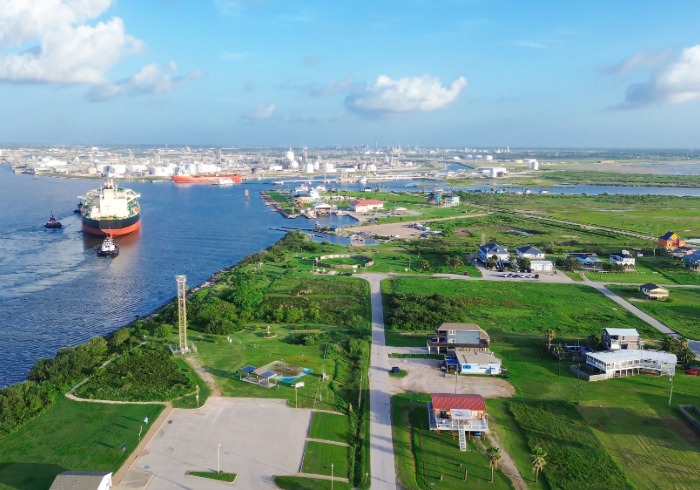
The Japanese state-owned lender and export credit agency provided a US$2.6bn loan in 2014 to support the development of Freeport LNG, a major gas liquefaction and export facility based on Quintana Island, south of Houston.
The project was co-financed by commercial lenders MUFG, SMBC and Mizuho, and was backed by US$1.15bn in guarantees from Nippon Export and Investment Insurance (Nexi), with other Japanese firms joining as equity participants and offtakers.
The facility has attracted growing criticism from community groups, which say it has worsened pollution and carbon emissions in an already heavily industrialised area, while adding safety hazards and infrastructure burdens.
Notably, in 2022, the facility was forced to temporarily halt operations after an explosion that sent a fireball more than 130 metres into the air.
Community leaders filed formal complaints against the project financiers in May this year, described by campaign group Oil Change International as a “first-of-its-kind” action. The complaints called on institutions to suspend ongoing support for Freeport LNG, including any potential expansion plans.
The complainants were informed on September 2 that JBIC would launch an investigation, Oil Change International told GTR.
The agency has since updated its website to show that an investigation is “under the procedures” as of September 1. A spokesperson said they could not disclose specific details.
“We are encouraged that JBIC is taking our complaint seriously,” said Melanie Oldham, founder and executive director of grassroots campaign group Better Brazoria: Clean Air & Water. “The only responsible outcome of this investigation is to cut off financing for Freeport LNG.”
Allie Rosenbluth, US programme co-manager at Oil Change International, also called on Japanese public institutions to “stop financing these dangerous, polluting and expensive fossil fuel projects”.
“We’re encouraged that JBIC has agreed to investigate the risky, polluting and dangerous Freeport LNG project, but accountability isn’t measured by opening a case; it’s measured by what happens next,” Rosenbluth said.
Ayumi Fukakusa, executive director of Friends of the Earth Japan, added that JBIC “continues to support new LNG projects” and called for “systemic solutions and reforms”.
Nexi and the three commercial banks did not comment when contacted by GTR.
A spokesperson for Freeport LNG said the facility’s “unwavering commitment to safety, reliability and environmental stewardship and preservation are at the forefront of our operations”.
“Our electric-drive LNG facility reduces plant emissions by over 90% relative to a typical LNG liquefaction facility, and our facility’s carbon footprint is the lowest of any LNG liquefaction facility in the world,” they said.
JBIC’s investigation is its third such move since January 2024, but independent examiners concluded the agency had not breached environmental guidelines in the two previous cases.
In August last year, examiners found complainants had not suffered damages as a result of a major export facility and pipeline project in Kitimat, British Columbia, called LNG Canada.
The previous January, examiners came to the same conclusion following complaints over the Ilijan LNG Import Facility Project in the Philippines.
In April 2021, environmental groups in Australia and Japan criticised JBIC for considering backing a proposed LNG project near Darwin. The agency went on to sign a US$346mn loan deal in December that year, and its website does not show any official complaint received.