
As fractured supply chains drive up working capital needs and AI infrastructure creates financing demands on an unprecedented scale, Asia’s banks and trade credit insurers are having to rethink how they assess, share and support risk. This discussion explores how the market is adapting to a trading environment in near-constant flux.
Roundtable participants:
- Seçkin Atılgan, senior director, trade credit Asia, Willis
- Harry Edwards, commercial director, Allianz Trade
- Peter Elder, regional head of banks and FIs, Asia Pacific, Coface
- Lee Garvey, head of credit risk solutions, APAC, Willis (chair)
- Rahul Saxena, managing director, Eliant Trade
- Pradeep Shaw, director, South & North Asia head of trade receivables finance and commercial bank trade products, Citi
- Vipin Vashishtha, managing director and global head of trade asset sales & syndications, Standard Chartered
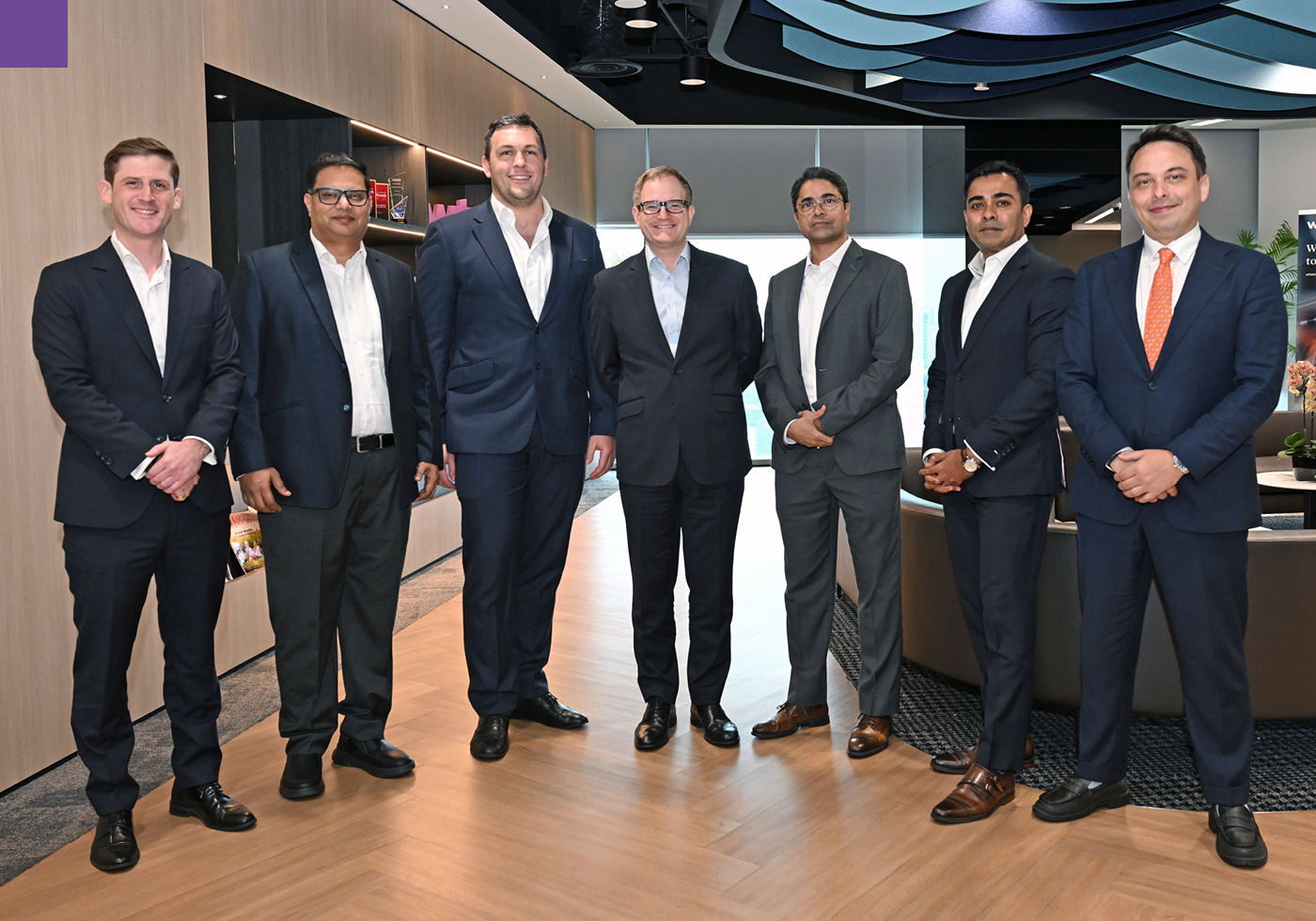
At a roundtable hosted by Willis, a WTW company, in late June, senior figures from across Asia’s banking and insurance sectors considered whether recent upheaval in global trade represents a temporary reset – or a more permanent change in how business is financed and risk managed.
A permanent reset?
The roundtable kicked off with a discussion about Asia’s shifting trade flows, with participants establishing that insurers are now operating in an environment of continuous turmoil, characterised by tariff hikes, energy shocks and shipping route disruption.
For Coface’s Peter Elder, that transformation is ongoing, but he pointed out that “we are seeing major crises happen on a regular basis”. As a result, the focus is now more on changing approaches and incorporating resilience into supply chains.
“It’s not necessarily about getting back to a new normal, a new steady. It’s actually, how can we be flexible? How can we be agile?” he said, adding that nobody is expecting the kind of “seven-year cycle of stability on the back of a crisis that we used to”.
Standard Chartered’s Vipin Vashishtha agreed, noting that trade is not just experiencing a temporary change. “This seems to be a new normal, a structural shift, as we are seeing signs of re-globalisation through more multi-nodal supply chains,” he said.
When asked how Citi is managing client expectations and providing support amid US tariffs disruptions, Pradeep Shaw said that, while the import fees initially came as a shock, they are now the norm.
High tariffs are no longer a subject of debate in business planning because these considerations are “already incorporated into business decisions”, he explained.
The discussion suggested that, while companies have broadly adapted to the immediate disruption caused by tariffs, the longer-term consequence is structurally higher demand for capital as supply chains become more fragmented and inventory-heavy.
Rahul Saxena of Eliant Trade, an inventory and trade finance solutions provider, said he believed Asia had seen an operational trade reset in terms of tariffs and rerouted supply chains, but not an economic one.
“As ‘just in time’ gives way to ‘just in case’, the money locked into working capital is now much more than it used to be,” Saxena said. This means that the level of capital required and how it is delivered are changing, with a particular need for inventory solutions.
He explained that bankers previously used a rule of thumb that saw global funding requirements as a multiple of around 1.2 to 1.8 times the rate of economic growth.
“But that multiplier has gone up significantly, and that’s the reason why you need much more capital to support trade going forward,” Saxena said.
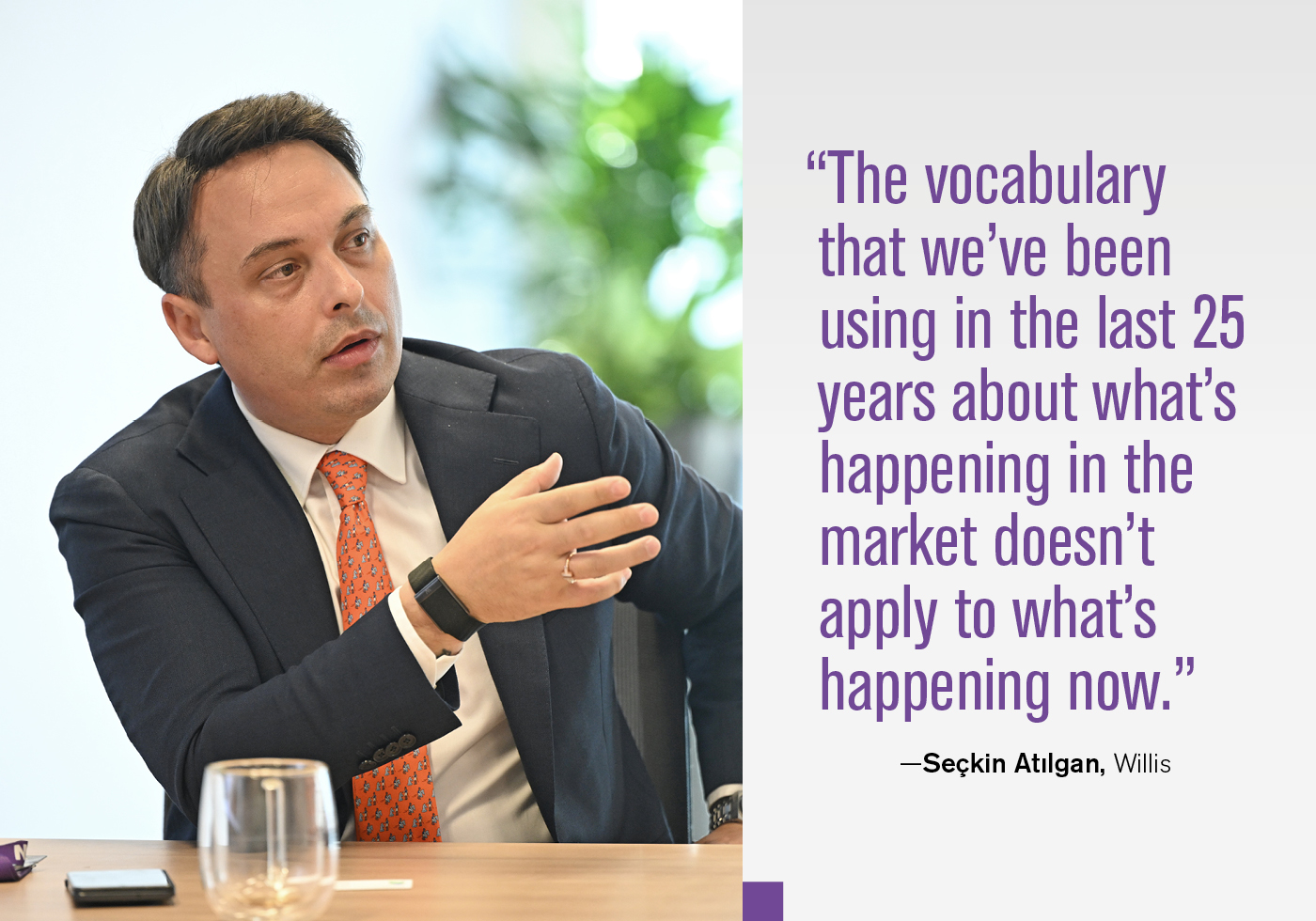
Willis’ Seçkin Atılgan took issue with the term ‘reset’ itself. “The vocabulary that we’ve been using in the last 25 years about what’s happening in the market doesn’t apply to what’s happening now,” he said.
“‘Reset’ is like pressing a button on your computer and then every small issue is solved and you start from scratch. That word doesn’t apply anymore.”
For Atılgan, clients are better prepared for tariff hikes and geopolitical turmoil than banks and insurers might assume. “We’ve underestimated our clients’ readiness for these tariffs, and things consistently changing.”
The ‘in-between era’
One major shift for the trade credit insurance sector has been ushered in by the supply chains underpinning AI infrastructure, particularly the rapid expansion of data centres.
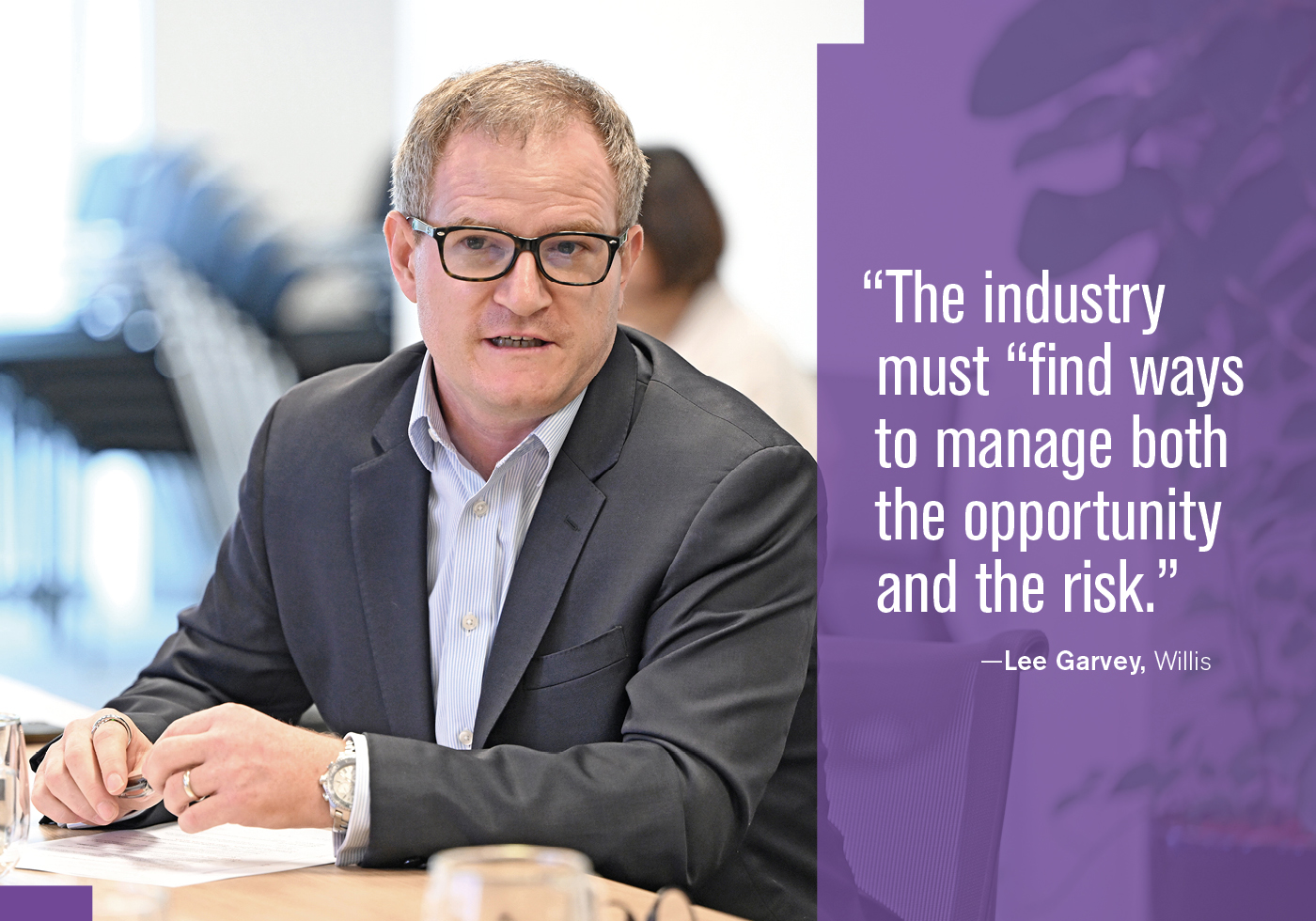
Willis’ Lee Garvey, who chaired the discussion, noted that the AI market presents some of the biggest business prospects globally, but the industry must “find ways to manage both the opportunity and the risk”.
A key difference between AI and other sectors is the amount of funding required, Allianz Trade’s Harry Edwards said.
Requests “are far in excess of what I’ve seen for any other type of traditional sector or subsector”, he said.
“The kind of data centres they are building at the moment are the size of some countries.”
Yet assessing the risk of participating in these trade flows is crucial, as many are relatively untested.
“Generally speaking, the kind of transactions that are being looked at are within supply chains that are relatively new and not necessarily well understood through experience,” Edwards said.
Coface’s Elder agreed: “The numbers we’re seeing are ones that we haven’t seen elsewhere, and I think the whole market, both on the bank and the insurer side, is also reflecting that in acknowledging that no one can do it alone.”
“The other point is the speed of the evolution,” Elder said. “We’re seeing clients come in and request one value at Q1, by Q2 it’s doubled and by Q4 it’s tripled or quadrupled.”
Insurers are having to change how they underwrite, too, because the technology is evolving so quickly and demand is high.
“You’ve got two exponential growth factors,” Elder said. “Everyone’s relying on a degree of partnership to work together to try and find their own answers.
“I was discussing with someone in the industry recently, who was explaining how the servers in data centres have a five-year shelf life due to the rate at which technology advances.”
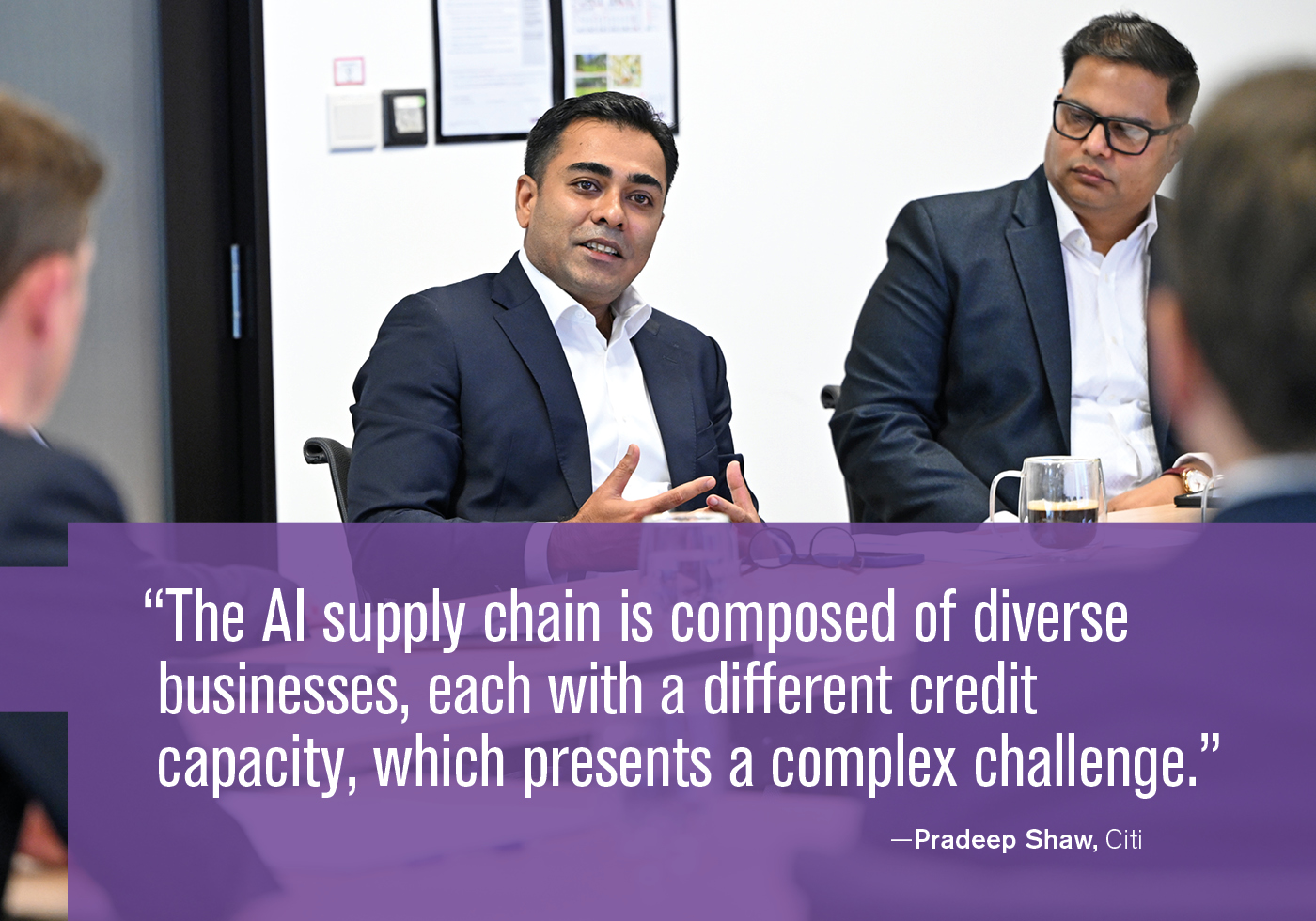
For Citi’s Shaw, the diversity of businesses across the AI value chain is also a factor. “The AI supply chain is composed of diverse businesses, each with a different credit capacity, which presents a complex challenge.
“If you use the classical lens of financial balance sheet analysis, supporting the entire supply chain will be challenging. This is where an alternative model of underwriting needs to be developed,” Shaw said.
In-depth industry knowledge is also a potential risk, he pointed out. “In an industry where deep knowledge is paramount, it is crucial for financiers to be well-versed.”
Willis’ Atılgan suggested that “we are in the in-between era”, as insurers work to address the new demands being placed on them. “I wouldn’t say the insurance market is there yet to face all the challenges that banks are facing,” he said.
“The business is so unpredictable. Within six months, we don’t know what the new demand from clients is going to be.”
However, he acknowledged that the insurance market is much more adaptable than it was 10 years ago.
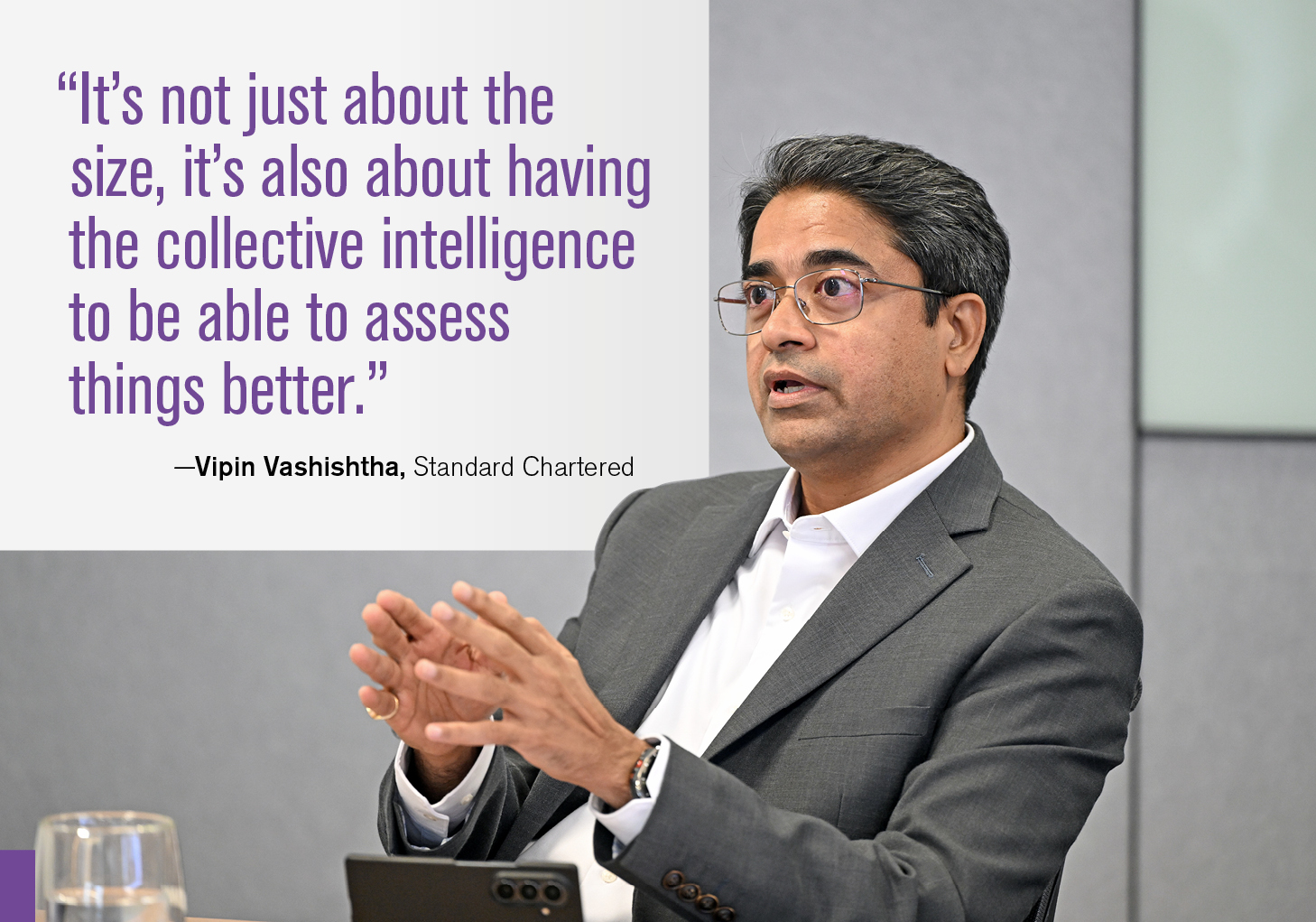
For Standard Chartered’s Vashishtha, the growing AI sector is a chance to deepen collaboration. “This is where the beauty of us working together is coming through. It’s not just about the size, it’s also about having the collective intelligence to be able to assess things better.”
Citi’s Shaw echoed this and flagged the need to understand the different participants in the supply chain.
“Unlike a traditional commodity, where the primary risk is tied to the value of physical goods, when we look into AI and technology supply chains, the value is the usability,” he said.
“Usability is also challenging due to complex export controls, which dictate which chips can be sold to specific parties. For instance, a chip’s classification can change if it is used in a different type of component.”
Participants agreed that these dynamics are creating a more complex risk landscape, requiring closer collaboration between banks and insurers as technology, geopolitics and regulation become increasingly intertwined.
New demands
Given the volatile geopolitical backdrop, the discussion turned to shifts in what clients are looking for and whether changing demands are driving the development of new products.
Citi’s Shaw made the point that corporate clients are seeking more holistic solutions from the lender, including innovative ways to support SMEs within their supply chains.
“The conversation has shifted from transactional engagement to strategic dialogue. This could be anything from managing capital flows to working capital advisory, understanding the risks in evolving supply chain networks,” he said.
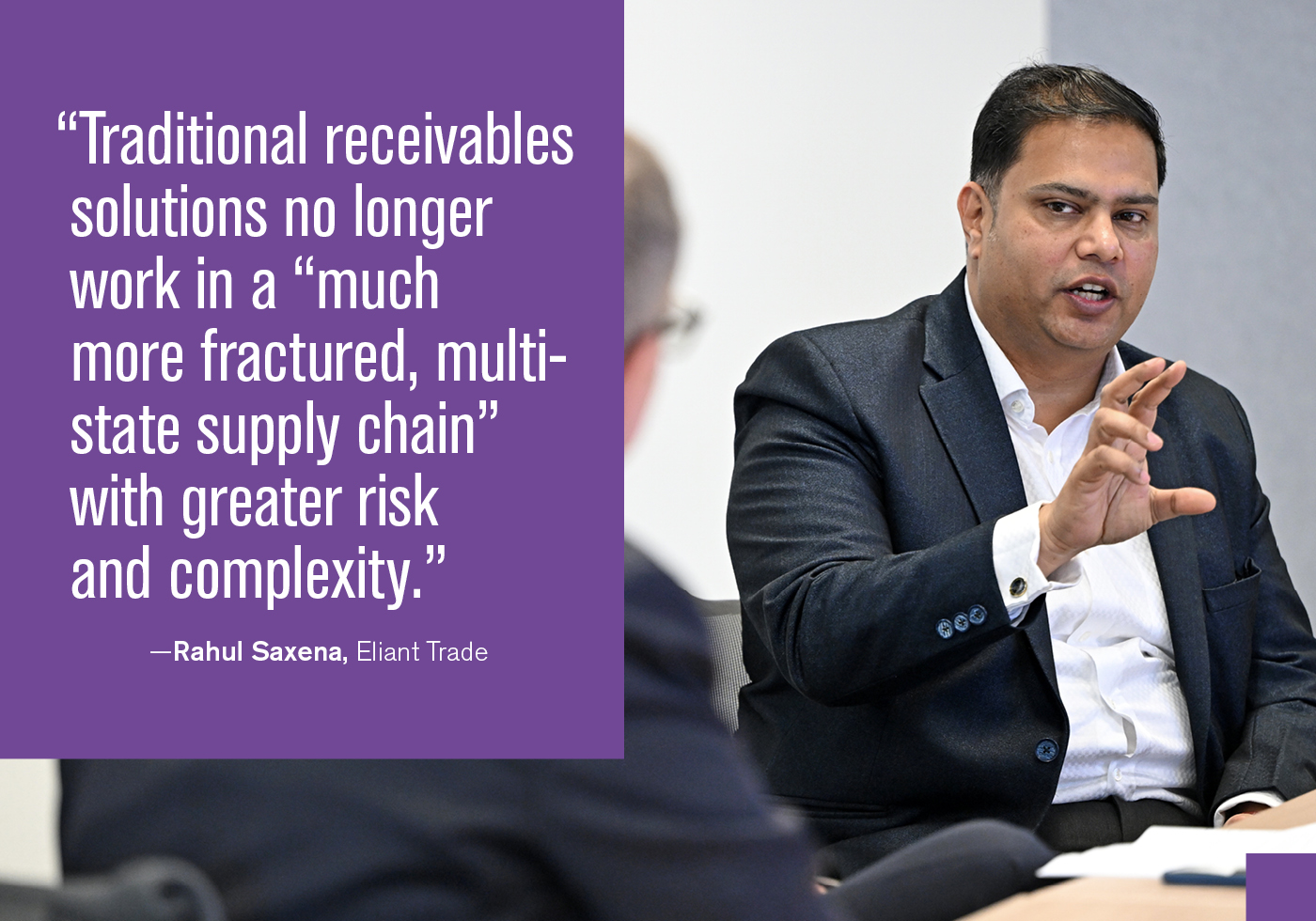
For Eliant Trade’s Saxena, traditional receivables solutions no longer work in a “much more fractured, multi-state supply chain” with greater risk and complexity. “That’s where you need to have a more structured solution. That’s where we are seeing an uptick in the demand.”
Working capital has become a more strategic discussion, he added, and has filtered into CFO and CEO-level conversations.
Clients are also looking for longer-term support, Saxena said. “We are no longer in a spot contract world,” he said, because large corporates want to secure two or three years of supply – something that is fuelling the need for scaled-up capital as well as higher demand for prepayments.
From the insurance perspective, Allianz Trade’s Edwards said the firm is seeing more requests for different structures, but that this has brought its own set of risks.
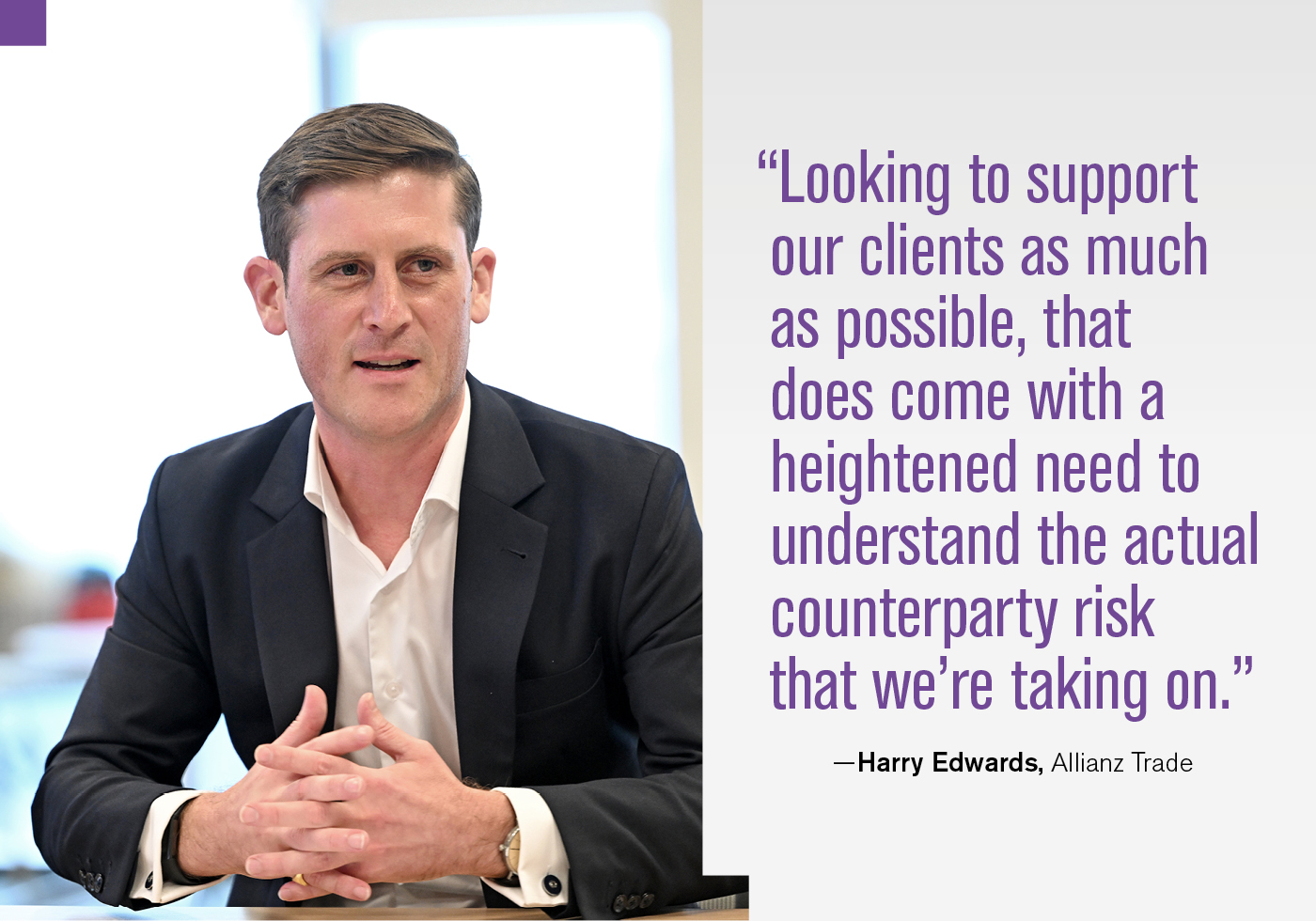
“We need to be very clear in the kind of risk that we are participating in,” he said. “Looking to support our clients as much as possible, that does come with a heightened need to understand the actual counterparty risk that we’re taking on, and any potential challenges that could be faced in the future.”
Edwards pointed out that the risk of the Strait of Hormuz closing was seen as very remote 12 months ago, but had since become a reality. “How much do you need to factor instances like that into your models, and to the way you approach the market?” he said.
He added that the insurer’s product had been around for more than a hundred years and hadn’t “drastically changed” in that time, with the firm able to “satisfy the demands of the banks inside the existing product suite that we have”.
Discussing the insurance sector more broadly, Atılgan noted that insurance has traditionally been backward-looking, with decisions based on claims histories and financials.
“We are coming to an era where this needs to change a bit, and we need to look to the future,” he said.
“The mentality is more, ‘would I be a partner, would I invest in this business?’ It’s not easy to change this mentality very fast.”
Looking ahead, Edwards emphasised that understanding counterparty risk will be key to future success. “To a certain extent, adaptability has to come into this as well,” he said.
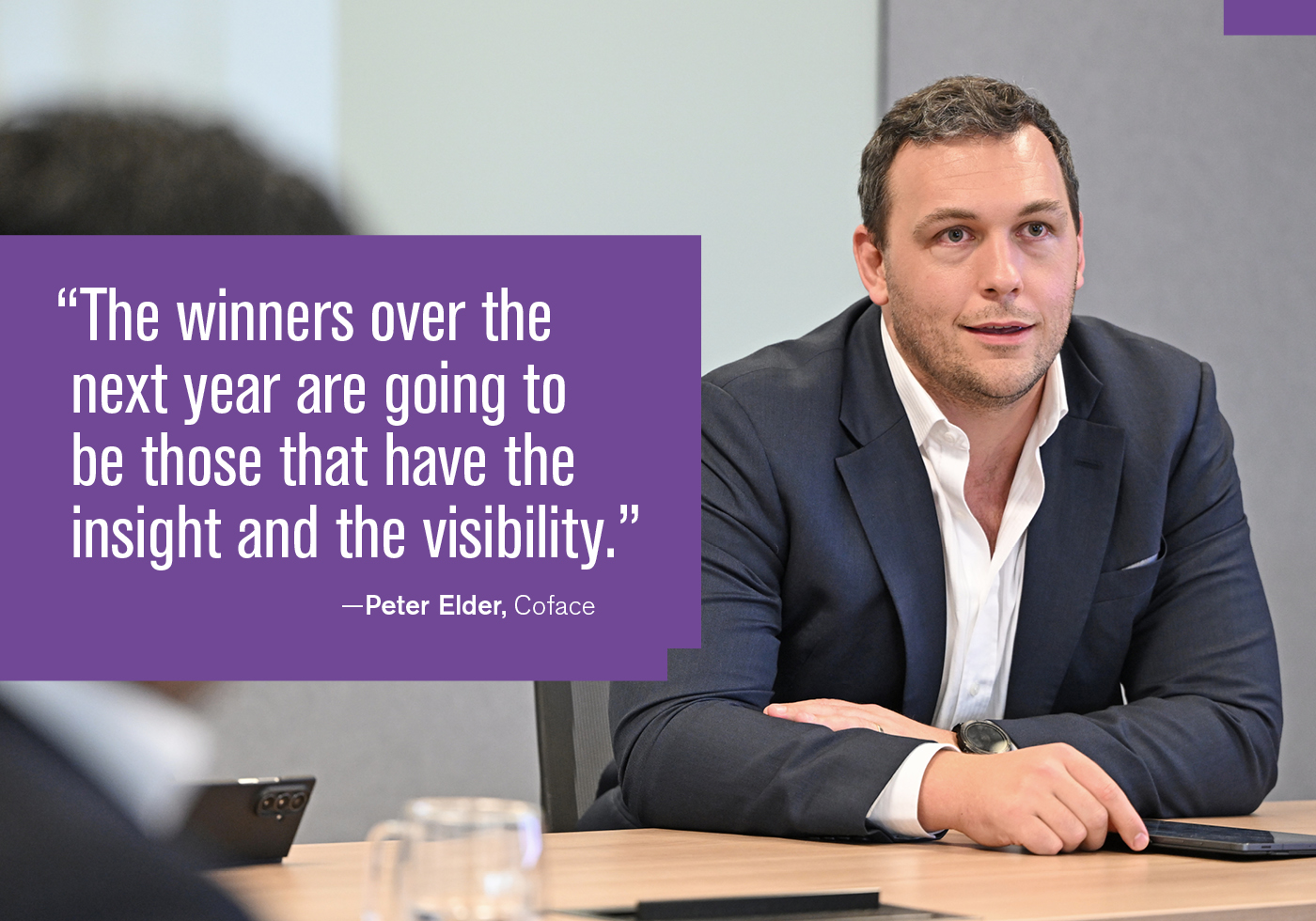
Coface’s Elder added: “The winners over the next year are going to be those that have the insight and the visibility.
“That’s where it comes down to some of that communication between partners – those that know their clients as well as possible, and those that then also know the debtors and the trade structure as well as possible, are going to be the ones that come out, because they can take a more forward-looking view.”