


- Regulator warns of growing strain between Palestinian and Israeli banks
- UN body says Palestine’s lenders are restricted by cap on correspondent bank shekel transfers
- Report details “collapse of Gaza’s economy” amid a near-total slump in regional trade
Palestinian banks face a growing risk of losing the correspondent banking links they rely on to finance imports, threatening already-thin volumes of trade finance for fuel, medicine and food, according to the local banking regulator.
Palestinian lenders can only finance imports and cross-border transactions by depositing their physical cash into correspondent accounts with their Israeli counterparts.
But these relationships are at risk of being cut, as the only two Israeli banks working with Palestinian lenders, Israel Discount Bank and Bank Hapoalim, have “continued to seriously threaten the termination of their correspondent relationships with Palestinian banks”, according to Yahya Shunnar, the governor of the Palestine Monetary Authority (PMA).
Current arrangements with the lenders have been extended only until the end of 2026, Shunnar told GTR. This has “provided limited breathing space, but it has not addressed the underlying structural problems”, according to the head of the PMA, which supervises and licenses the banks operating in the West Bank and Gaza and advises the Palestinian government on financial matters.
In order for Israeli banks to provide correspondent banking services to Palestinian institutions, the Israeli finance ministry issues time-bound letters of indemnity that protect them from money laundering and terrorism financing risks.
However, Israel has increasingly issued letters of indemnity with validity as short as two weeks, according to a report by the UN Conference on Trade and Development (UNCTAD) last month, which the body said was creating “costly uncertainty”.
Shunnar told GTR that “extensions to the letters of indemnity have consistently been granted at the last minute and no actual severance of correspondent banking relations has occurred”, meaning “there have been no reported transaction-level delays or declined transactions for clients”.
Nevertheless, interbank activity has been affected, he said, as “international correspondent banks have shortened the permitted tenors of swap and foreign-exchange transactions, which are important instruments for managing Palestinian banks’ liquidity amid continuing constraints on the repatriation of Israeli shekels”.
Shekel transfer cap
Compounding the issue is growing constraints on the repatriation of Israeli shekels, a major source of financing for crucial trades, both the PMA and UNCTAD said.
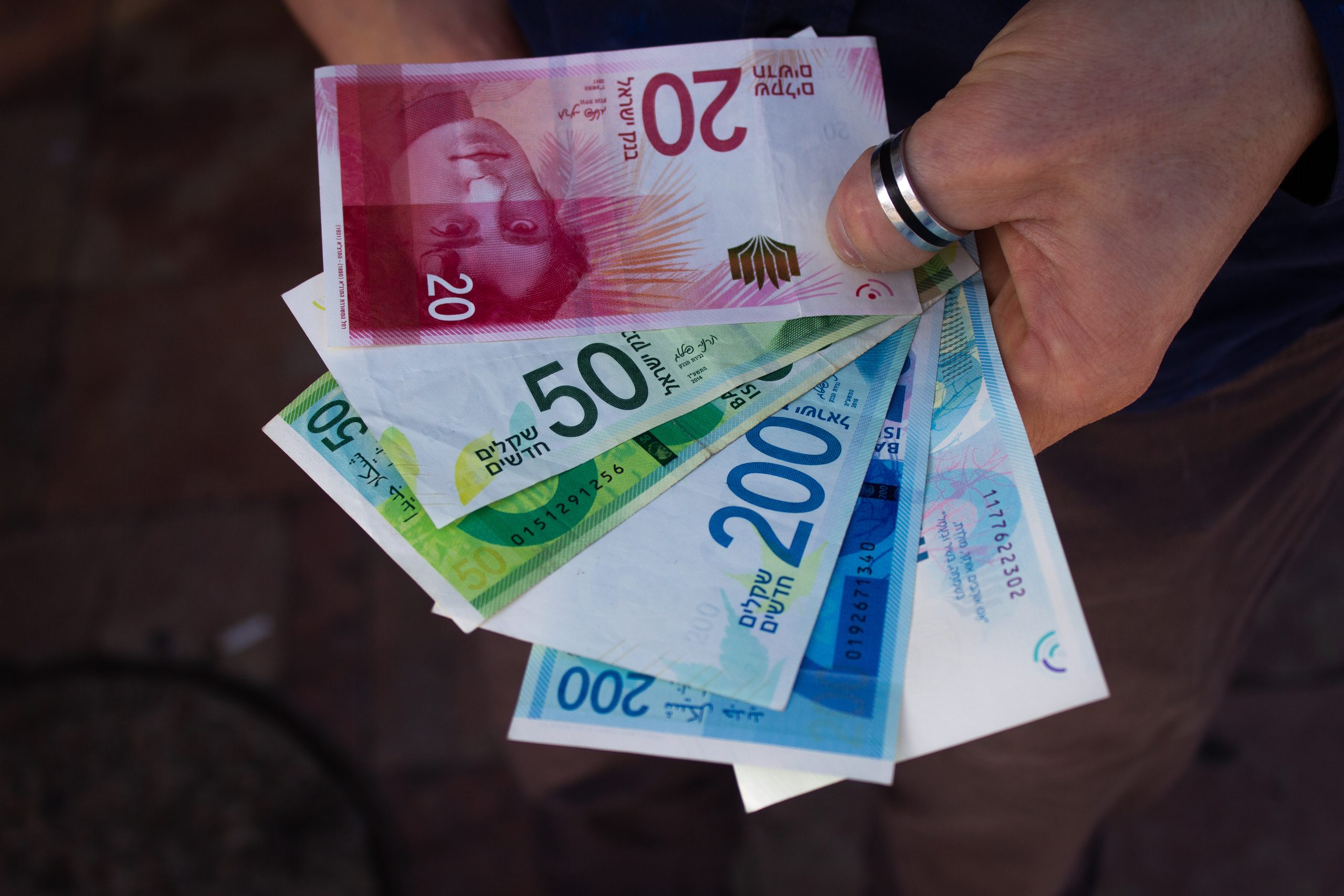
Palestinian banks must use the shekel because they have no currency of their own. For the past six years, the Israeli government has capped transfers of shekels from Palestinian to Israeli banks at NIS18bn per year – transferred in four quarterly shipments of around NIS4.5bn (US$1.5bn) – which has consistently fallen short of the physical cash taken in by Palestinian banks each year.
The Bank of Israel has in the past approved exceptional transfers above the ceiling to ease the build-up of cash in Palestinian banks, but no such exceptions have been granted over the last two years, according to a source familiar with the matter.
As a result, billions in banknotes have now accumulated in local vaults, according to the Report on UNCTAD assistance to the Palestinian people. The UN body found NIS16bn worth of “unusable” physical shekels were sitting idle in West Bank vaults at end-2025.
The PMA said the surplus stock of cash has since continued to increase, “reaching approximately NIS18bn (US$6bn) by mid-2026”.
A move by the Israeli government last month to bring forward the fourth-quarter quota has helped alleviate the shekel-surplus crisis, Shunnar said. However, with this year’s quota already fully drawn and no further shipments expected until it is renewed next year, the surplus is projected to rise to around NIS20bn in the coming months, he added.
Israeli restrictions on the repatriation of the currency “deprive Palestinian banks of these indispensable digital balances” needed to pay for imports and cross-border transactions “at a time when the need is most acute”, UNCTAD warned.
Before the escalation of conflict in October 2023, Palestinian banks financed approximately NIS51bn in trade with Israel per year, according to PMA estimates. This volume has since declined to around NIS40bn.
“Continued uncertainty regarding correspondent banking arrangements, the accumulation of excess shekel liquidity, the withholding of clearance revenues and restrictions on Palestinian labour are placing pressure on both the banking sector and the wider economy,” Shunnar said.
He warned of broader economic risks including reduced trade, higher prices and shortages of essential goods such as food, fuel, electricity, water and medicines, suggesting a “full crisis” could arrive by the end of the year.
Talks are currently underway between the Israeli government and Israel Discount Bank and Bank Hapoalim, but the PMA claims it has not been involved.
The regulator’s stance “remains clear”, the governor said. “Correspondent relationships should be long-term, sustainable, and free from political bias. Relying on temporary short-term extensions that are heavily politicised is not a solution.”
The PMA is also in discussions with international correspondent banks, but argues those relationships ultimately cannot replace the shekel channel.
The Bank of Israel, Israel Discount Bank and Bank Hapoalim did not respond to requests for comment from GTR.
Trade slump
The Palestinian banking sector now faces a real risk of collapse, UNCTAD’s report also noted, and lenders may soon be unable to sustain essential trade flows, which have significantly shrunk since the start of the war three years ago.
The Palestinian trade deficit intensified in 2025, according to UNCTAD. Exports of goods and services fell 9% to about US$2.65bn while imports held at US$6.57bn, leaving a trade deficit of about US$3.9bn.
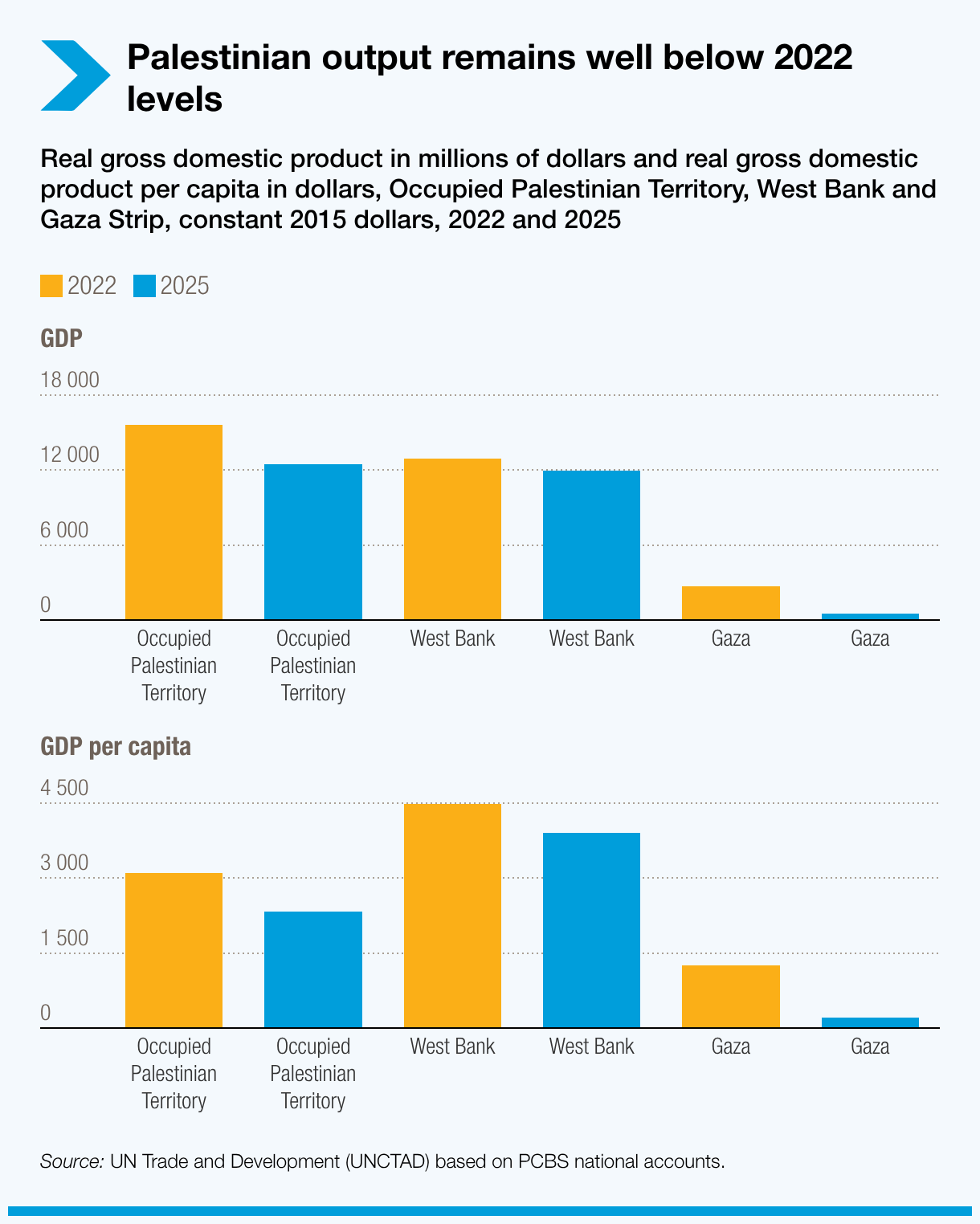
In Gaza, military operations have “flattened productive capacity”. Agriculture, tree crops and fishing have been “eliminated”, UNCTAD said, “isolating Gaza from domestic and global markets and rendering it wholly reliant on humanitarian aid”.
Since the escalation of the conflict in October 2023, Gaza’s share of Palestinian trade has fallen from nearly 18% to less than 4%.
Meanwhile, Palestine’s dependence on Israel as a trading partner has deepened, UNCTAD said.
“The permanent trade deficit is structurally entrenched. Restrictions and trade costs inflated by occupation ensure that Israel remains the dominant source of Palestinian imports and the primary destination for Palestinian exports, despite the existence of competitive alternatives.”
Israel also restricts a long list of ‘dual use’ civilian items, including essential technological inputs, machinery, fertilisers and chemicals, thereby pushing exports toward low value-added items, while “stunting Palestinian capacities to produce import substitutes at home”, UNCTAD’s report said.
The shekel’s appreciation in 2025 and early 2026 also made third-country exports more expensive and undercut domestic producers of importable goods.
UNCTAD argued the current priorities should be transferring withheld Palestinian revenues and safeguarding the banking system and urged the international community to press Israel to stabilise correspondent banking relations and allow Palestinian access to global markets.