


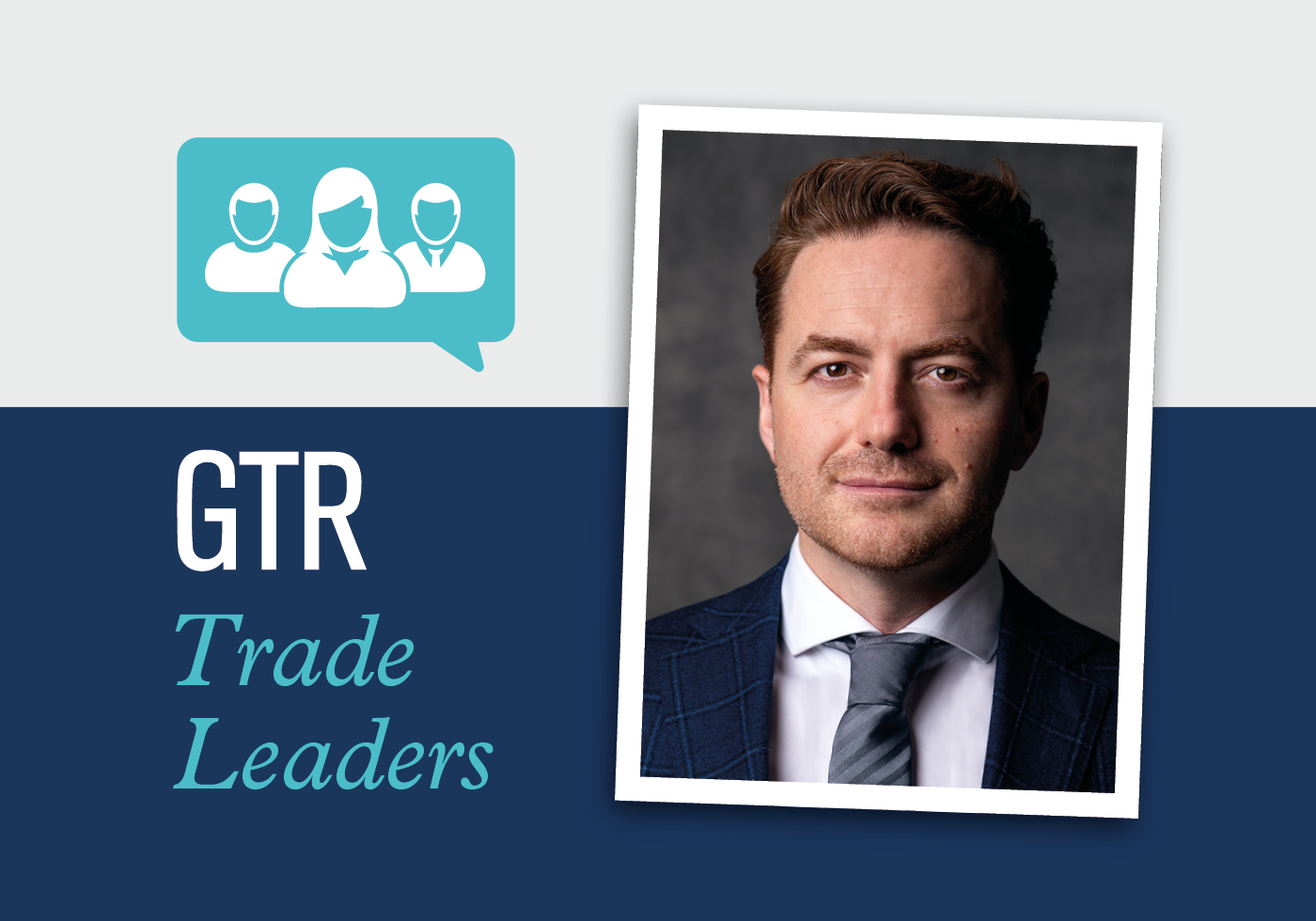
After nearly two decades working in commodity finance for banks, 2023 proved to be a crossroads for Orhan Gunes. It was that year Gunes launched TradeQraft, a platform that originates financing facilities for commodity traders and distributes them to investors, using his small team’s industry expertise and technology to bridge funding gaps across the sector.
GTR caught up with Gunes on the sidelines of last month’s GTR Commodities event in Geneva, to hear how TradeQraft has fared during a turbulent but busy period for the market, and to speculate on what the next phase of evolution will look like for banks, private credit investors and commodity traders.
GTR: Could you tell us about your background, and what continues to attract you to the commodity finance world?
Gunes: I’m an ex-banker. I spent nearly 20 years across four banks in Switzerland and the Netherlands, managing commodity trade finance portfolios and sitting on credit committees. I was a banker, a relationship manager, then a corporate banking head, and as client requirements changed it taught me a lot.
I’ve always enjoyed watching this industry change, whether that’s the period after 2000, the years after the global financial crisis or the geopolitical issues after the Covid world. All of this has forced us to evolve.
Now, we’re seeing another round of change. Until recently banks tended to be more global, whereas now this idea of local expertise or specialisation has become much more important. I find this quite fascinating, because then you need to know about politics, diplomacy and geography as well as things like logistics and operations, and I always try to stay close to the trade.
GTR: You founded TradeQraft in 2023. What was the idea behind that, and how has the business developed?
Gunes: When I formed TradeQraft, I could see that the market was moving towards alternative lenders and private credit, and at the same time, banks’ capabilities on trade and commodity finance were evolving. Banks are unchallengeable at providing liquidity, but when it comes to executing transactions, where you need to be close to the clients and their businesses, that can be a challenge.
The idea was that we could originate transactional and structured commodity finance – initially for the banks that didn’t have origination in Switzerland or in Europe, and now for various other institutions as well – then distribute to private credit and alternative lenders.
We’re growing our network now, and have a presence in Amsterdam, Geneva, Istanbul, New York, Vienna and Zurich. But the plan is to grow our capabilities – maybe by adding a fund – rather than to build a large team.
Of course, things have changed. With the geopolitical issues we’re seeing, a global lender approach is a bit less valuable now, whereas a specialist approach on a particular geography or product is much more relatable to the client.
We try to focus on these areas, finding specialist lenders or markets and linking that to our clients, while taking a very deep dive on transactional analysis and financial due diligence.
GTR: How do you gain banks’ trust in a sector where most are quite risk averse? And how do they fit into your vision?
Gunes: It’s true banks are more conservative, but they are very capable at assessing risk. There is a collective decision-making, consensus-building approach, and corporate memory about clients and transactions, which are really valuable to banks. Their underwriting criteria is very sophisticated, and they have the human power to keep the quality high.
That means banks already have strong bilateral relationships with borrowers. So for us, we bring more specialised structures to banks – like club deals, private placement, syndicated transactions – or sometimes we might help a smaller or mid-sized client expand its credit facilities, and what we can add is in-depth knowledge about that client.
However, in my opinion, banks are crucial only as a liquidity provider. As an executor of commodity trade finance, I would be a bit more sceptical about their future approach. They have challenges around Basel 3, and I think we’ll see more of a squeeze on capital consumption and risk-weighted access.
“The fundamental fact here is that you need to understand transactions extremely well, and there is no shortcut to doing that.”
Orhan Gunes, TradeQraft
GTR: Does that put banks in competition with private credit? And what is that market’s appetite for trade finance looking at right now, after a few high-profile scandals or losses?
Gunes: We don’t see banks as competing with private credit or alternative lenders. They are complementary to each other, and as the industry evolves, so will lending techniques and underwriting styles.
In private credit, appetite isn’t really uniform across trade finance products. For example, invoice financing or receivables financing was already a very crowded area, and we have seen a lot of issues in that market lately, so risk appetite is fluctuating there. But other areas, like working capital, borrowing base, repo or pre-export financing, are still attractive.
Also, just as banks are being careful around financing right now, private credit is looking to go deeper on understanding clients and their intentions. That’s a natural reaction to the market situation.
Of course, things can go wrong, and if the size is particularly big then it can impact the amount of liquidity coming into the market. We’ve seen these kinds of fluctuations in the past, when Hin Leong or Qingdao [warehouse fraud] happened.
The fundamental fact here is that you need to understand transactions extremely well, and there is no shortcut to doing that. As a lender, you need to do your homework extremely well. For us, if we can help make that homework a bit more cost-effective, we can make transactions more accessible to family offices, asset managers, wealth managers or pension funds.
GTR: Looking at the crystal ball, how do you see the commodity finance market changing in the near future?
Gunes: I would probably go back to the role of the banks. I could imagine banks becoming providers of liquidity and risk cover, a bit like pension funds and insurance companies, but their teams in trade and commodity finance probably shrink and evolve.
There is also technology. AI is clearly making a lot of progress and improving in quality, but for me, the value of that manual analysis – first-hand understanding from clients, markets, ports, trades, shipments – is not going to be diminished. The brain power of humans is still going to be essential.
Adoption of technology will make a big difference to trade finance, though. Look at what has happened in the last five years. It’s not just electronic trade finance instruments, but also collateral management, transaction monitoring, those kinds of tools have really evolved.
You can see any vessel or any container at any time, and you can track the inputs into those goods. Even if you take the clothes we’re wearing or the furniture we’re sitting on, those materials are coming from many different origins, and we’re now seeing ways to track all of that.
Ten years ago, it was unthinkable that you could track timber, copper or barley and find out how they were produced; that’s going to be extremely valuable.
GTR: Outside of your day job, what keeps you busy?
Gunes: We are a small family – we have two girls, four-and-a-half and two.
In my spare time, photography is a big passion of mine. I’ve been an avid photographer since I was 18, and I have a website if people would like to check it out.
I also have an interest in history, especially the history of trade. I’m particularly interested in trade in the Mediterranean in the 17th and 18th Centuries: why were the Alexandra or Damietta ports important versus Smyrna, Izmir or Constantinople to the routes going to Amsterdam, Paris and London? What commodities, exchanges, instruments were being used?
In the end, it’s about curiosity, right? You get curious about how something in history worked – say how silk, gold, pepper or sugar were sold – and then you look into the details and you start to see how that led to our world today. It’s fascinating, and maybe in the future I can do some writing about this.