
From US tariffs and Basel-driven capital constraints to growing interest in supply chain solutions and infrastructure finance, South Africa’s trade financiers are adapting to a rapidly shifting environment. In Johannesburg in late 2025, senior lenders joined GTR to discuss how clients are responding, where trade flows are moving and what’s next for financing and risk management.
Roundtable participants:
- Louis du Plessis, head of trade and working capital, Rand Merchant Bank
- Derryn Faure, head of trade finance structuring, syndication and documentation, Investec Bank
- Msawenkosi Hlanti, executive head: trade sales, South Africa, Standard Bank
- John Molanda, managing director, trade and working capital product, Absa (host and chair)
- Rashnee Pather, head of product supply chain finance, Nedbank
- Emuel Schoeman, co-founder and managing director, Addendum Financial Technologies
- Natalie van Graan, product management, trade and working capital, Southern Africa, Standard Chartered
- Prince Wadie, trade structuring head, Sub-Saharan Africa, Citibank
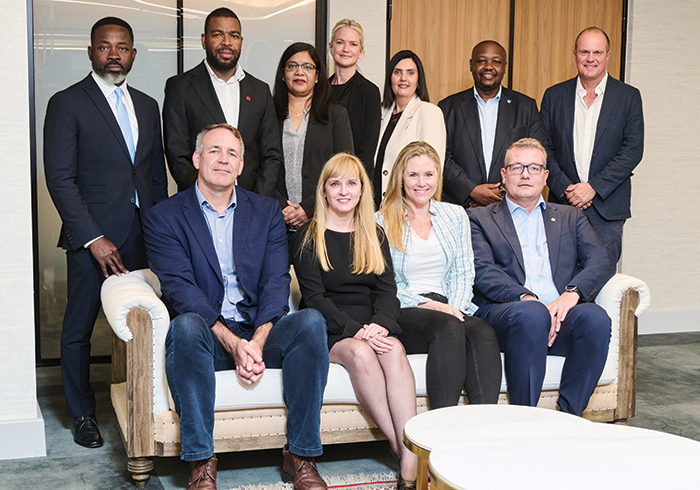
Front row, left to right: Emuel Schoeman, Addendum Financial Technologies; Michelle Knowles, Absa; Derryn Faure, Investec; Louis du Plessis, Rand Merchant Bank.
Molanda: South Africa’s trade with the US has been hit hard by successive tariffs on autos and agriculture, with knock-on effects for jobs and GDP. How are banks responding to this and how is it affecting clients?
van Graan: From a bank’s perspective, we’re reviewing client portfolios, especially looking at those longer tenor transactions – asking if our clients really need them right now. In going through portfolios, it turns out many clients don’t actually need such long-term financing. So, we’re moving to shortening tenors and re-evaluating our pricing, which hadn’t been updated for years. We’re also involving development finance institutions (DFIs) to help us and clients with distribution and financing, especially where credit ratings are becoming a problem.
A big focus is on supply chain finance. Many clients are looking at the product to see if they can get better relationships with, and financing options for, their suppliers – especially where those suppliers couldn’t get favourable rates on their own. By using the anchor buyer’s credit strength, suppliers can get better access to funding.
Pather: Clients are renegotiating contracts with their counterparties, including on pricing and Incoterms. There’s a definite shift to move more of the cost burden downstream, away from themselves. There’s also a renewed push to reboot sales into Asia, Europe and Africa. Accelerating plans to diversify portfolios and look for new business models seems to be a big trend. I heard on the news that increased tariffs are expected to result in about 40,000 job losses in South Africa. From the client side, it’s not just about looking for new markets but also fundamentally changing how they do business in response to the impact of these tariffs.
Faure: Market diversification is absolutely crucial now. The US was a huge market for exporters, but with the loss of the African Growth and Opportunity Act (Agoa) and also the imposition of US tariffs, it is no longer as accessible. So clients have to look at other markets in Africa – leveraging the African Continental Free Trade Area to boost intra-Africa trade and build regional resilience – as well as Asia, the Middle East and Europe. These are high-growth economies and are especially in demand for agricultural goods like maize, lamb and beef.
The Brics expansion also gives South Africa a bigger platform now to strengthen South-South relationships, which currently account for about 21% of our total trade. Europe is also key. They have removed customs duties on nearly 98% of imports from South Africa.
But the impact is huge: market diversification means more due diligence on new, less familiar markets and counterparties, having to consider perishability, seasonal production, rerouting and financing new cold-chain logistics as well as unfamiliar political and economic situations in these new markets. The tariffs are ultimately forcing up costs, reducing exports and lowering demand, causing a ripple effect through the economy.
Hlanti: The majority of clients assume that market diversification is easy – quite simply put, it isn’t. Changing your supply chain, customer base or target market is difficult as these are typically built and sustained over time. The opportunities in regions such as China, the wider Brics economies, and the UAE are real; however, each market is nuanced and carries unique underlying risks. Our role as banks is to provide clients with key market insights, such as understanding sovereign risk and the regulatory environments that our clients operate in. The provision of information and guidance is where banks come to the fore and provide real value.
With respect to tariffs, the most potential adverse impact is on jobs, particularly within auto component manufacturing. Suppliers feeding into original equipment manufacturers (OEMs) have weak balance sheets and are subject to scarce and often expensive liquidity. For these suppliers, not just an export solution but a local one is required. Implementing supplier financing for the OEMs injects liquidity affordably and makes supply chains more resilient, ultimately safeguarding jobs. For us, the social impact of the tariffs is the primary consideration.
du Plessis: In agriculture, there’s a difference between commoditised and specialised products. Some exports to the US are seasonal, such as citrus, which are still in demand in the US and fetch a good price – so those flows continue. On the auto side, the impact is also significant. But many of our clients are part of global automotive brands rather than producing their own models, and those groups are now looking for ways to reroute supply – for example, by diverting units originally destined for South Africa to other markets.
From a banking perspective, it’s about patience. These industries won’t disappear; we just need to support them through a three- to five-year cycle until they are on a solid footing again. As for the broader impact, the expected reduction in nominal GDP is between 30 and 50 basis points – not catastrophic, but certainly still significant.
Wadie: Available data indicates that most of South Africa’s exports, about 80%, go to the rest of Africa, Asia, the Middle East and Europe. The current dynamics also suggest SMEs are gaining some share of export, in comparison to the traditional large corporate players, and these SMEs have some reliance on Agoa.
It’s worth noting that new partnerships are forming, including sovereign funds and DFIs channelling investments and directing funding to asset classes underpinned by commodities, including critical minerals. There is also a shift to direct discussions between sovereigns and corporates, with underlying interest tied to critical commodities and other resources.
Faure: Another very important point that we didn’t mention is volatility in the rand to US dollar exchange rate, which adds an additional layer of financial risk that needs active management. When the rand weakens, imports are more expensive, which will have a knock-on effect on consumer prices and fuel inflation, which ultimately bites into businesses’ spending.
van Graan: Something that goes hand-in-hand with that point is hedging. It’s becoming far more popular. Clients come to us wanting to hedge both FX and commodity exposure, including structured loans with hedging built in.
Molanda: Something I’ve observed from reading banks’ financial statements is that the documentary trade business has been doing better compared to some other business. Is corporates’ need to re-route and establish new relationships causing a bump in that line of revenue?
Wadie: I haven’t specifically analysed the data, but I believe the growth in documentary trade finance isn’t directly attributable to tariffs. It is most likely driven by other recent market developments, including strong demand in key sectors, leading to increased use of bonds and guarantee instruments in areas such as ICT, media and telecommunications, as well as broader strategic business avenues. While tariffs were initially expected to boost uptake, growth appears more closely linked to objectives such as securing new business, strengthening supply chain resilience and expanding into new markets.
Clients are also increasingly seeking commercial financing solutions for their buyers. These help monetise receivables, accelerate cash inflows, transfer risk, improve free cash flow and maintain a lighter balance sheet compared to competitors.
“From a banking perspective, it’s about patience. These industries won’t disappear; we just need to support them through a three- to five-year cycle until they are on a solid footing again.
Louis du Plessis, Rand Merchant Bank
van Graan: We’ve also seen a tremendous increase in demand for guarantees over the last year because we’re getting an influx of China-led projects, especially in solar and wind energy. If I can put a number to it, at Standard Chartered, we’ve seen a 400% increase in work related to solar and wind farms in South Africa over the last year. The Chinese companies involved only want guarantees, which they then use to secure further funding.
Hlanti: The tariffs haven’t really changed the numbers from a documentary trade perspective, although letter of credit confirmations specific to Africa risk have ticked up rather substantially.
Molanda: That’s a perfect segue to the next question on infrastructure. I’m quite curious about what impact the government’s infrastructure plans are having and if there are any innovative products or partnerships out there?
Hlanti: Infrastructure is a critical component within the South African context, especially with the government’s infrastructure plan and the programmes supporting everything from base battery storage to renewables, such as solar, wind and water. There are two main elements to consider: the actual project funding of independent power producers, which tends to be long-term in nature, and then, from a trade finance perspective, the role banks play in the engineering, procurement and construction (EPC) space.
There is substantial Chinese involvement in each of these categories, which is leading to growth in local bank confirmations and guarantee re-issuances from banks. We are looking at localising risk within South Africa, which is where credit appetite becomes relevant. When banks issue guarantees, bid bonds and grid capacity guarantees, it’s vital to determine risk appetite – whether to go it alone or to partner with DFIs, insurers or other banks to share in the underlying risk.
Aside from project finance, there’s also a need for short-term funding, especially for early works, equipment procurement and goods supply that feed into these infrastructure projects. Partnerships between commercial banks, DFIs and other entities remain essential, as the market hasn’t yet fully explored the trade opportunities in EPC risk and collaboration.
Wadie: One observation is the underutilisation of diverse trade finance instruments beyond traditional bonds and guarantees. This is particularly relevant for infrastructure projects, which face complex limitations, especially in credit capacity. It’s a global challenge, not just in South Africa.
At Citi, we have focused on optimising the use of limited credit capacity to support large projects. One strategy involves discounting interim project certificates after issuance and acceptance, providing upfront liquidity rather than waiting until maturity and allowing developers to recycle funds more quickly. This reduces the need for large upfront credit lines.
We also distribute project-linked receivables to a range of investors, including multilateral development banks, which helps free up capacity for further discounting.
Faure: South Africa has established the Infrastructure Fund, housed within the DBSA, which takes the first-loss portion on deals. Initiatives like this make previously unbankable projects viable. More DFIs and multilaterals need to take on first-loss exposures, as this ‘trade, not aid’ approach makes transactions more attractive for commercial banks.
van Graan: There was an International Finance Corporation conference two weeks ago where they confirmed they are looking at taking on first loss, and they are really starting to realise we need them to do that.
Faure: Given the government backing and the involvement of shareholders, there are still a lot of aid-funded projects, but there is scope to shift a portion of this ‘aid’ towards these types of trade projects that grow capacity. There are ways to allocate funds more strategically.
du Plessis: Aside from the first-loss discussion, there is a missed opportunity to fund projects with short-term finance where requirements do exist. Long-term project financing – spanning seven, 10, 15 years could be priced at Sofr plus a margin of 7% to 9%. Most of the time these projects require inputs, so why not draw on short-term finance in the build phase and make projects cheaper over time?

“One observation is the underutilisation of diverse trade finance instruments beyond traditional bonds and guarantees. This is particularly relevant for infrastructure projects, which face complex limitations, especially in credit capacity.”
Prince Wadie, Citibank
Molanda: The risks and impacts of climate change are well-known, particularly for agriculture and mining. But are you seeing a real demand for ESG-linked trade or supply chain finance? And if so, do those products include a strong incentive for the client to actually do something substantial?
du Plessis: ESG requires more compliance, which results in more costs that can rarely be absorbed by revenues made from smaller suppliers. Supply chain finance is already provided at tight margins, so adding an ESG incentive to transactions makes it more difficult for banks to participate in these types of structures. The returns just don’t make sense, but clients do want ESG features and we want to support that. The real issue now is how we fund it. Over the last year, what I’ve seen is more clients willing to work with us on costs. There’s been a shift, where some clients say, ‘OK, we understand this can become uneconomical and we’re willing to help cover ESG rating costs if we need to’.
Wadie: ESG considerations are now integral to most financing forms. But banks face a challenge in securing dedicated ESG-linked funding and often must draw from the same liquidity pools used for conventional projects. This results in ESG project funding costs being similar to conventional funding, which limits the uptake of ESG initiatives.
To overcome this, it’s essential to differentiate the pricing points for ESG and conventional funding. That would provide a financial incentive that justifies the additional reporting and other requirements associated with ESG projects.
Hlanti: I’ve seen stronger demand for ESG, just not necessarily on the environmental side. In a South African context, it’s the social aspect that is also relevant: inclusivity and the broad-based empowerment structures that seem more relevant in our supplier financing programmes. The challenge, however, is still about how banks raise competitive funding for ESG-linked financing opportunities. As much as clients want to achieve their sustainability-related KPIs, banks don’t necessarily get afforded capital or funding cost benefits. It is sometimes difficult to retain the commercial viability of these opportunities. However, clients still expect that incremental gain, so it will remain.
There’s been a lack of standardisation, in my view, within the trade finance space, in terms of how we actually apply ESG on guarantees, documentary trade or supply chain finance, which creates a bit of confusion in the market and between clients. It is critical that we try to standardise these principles, specifically for trade finance. I know the International Chamber of Commerce is trying with its sustainability principles, but I think it’s going to be critical.
Schoeman: South African clients have trouble defining what ESG is supposed to mean for themselves or for suppliers. Structurally, you can incentivise suppliers through different platform fees. That can work if suppliers meet certain criteria and then move down the cost curve. The fee difference gets rebated to the client, so the client can use that money on ESG audits or the costs involved. You can also structure solutions where the client picks up the fee in exchange for a preferential ESG rate if they hit certain targets. But clients really struggle to define their ESG objectives; even with social factors, people find it confusing. Still, there are opportunities to make cost-free structures, focused on the supplier or the buyer.
“More DFIs and multilaterals need to take on first-loss exposures, as this ‘trade, not aid’ approach makes transactions more attractive for commercial banks.”
Derryn Faure, Investec Bank
Pather: Nedbank has implemented a comprehensive ESG framework, ensuring that every deal is rigorously assessed by a committee. This approach has enabled the bank to consistently deliver transactions that meet global sustainability standards, reinforcing our commitment to responsible banking and long-term value creation.
van Graan: At StanChart, we’ve seen a huge increase in ESG and our focus on that is very strong. We follow the London framework and help clients meet KPIs. Our programme uses tier-based pricing; if the client is at one level, they’re priced at that level, and as they progress, the pricing improves. This helps them pay for ESG in-house governance. We now have a suite of sustainable products, so a client can have a regular supply chain finance programme, or a sustainable one. If you take the sustainable option, it means that you qualify for benefits up to a point. But there are certain things that you’re not qualifying for, and we help you get to that point, and we give you a certain time frame to get to that point.
Wadie: At Citi, our ESG drive includes a dedicated ‘Citi Social Finance’ unit. The team’s focus includes assisting FIs in deploying capital to meet their ESG commitments and developing tailored solutions in collaboration with multilateral development banks, DFIs and other impact investors.
Molanda: Emuel, how are clients engaging with supply chain finance programmes more broadly, and has digitisation helped accelerate adoption?
Schoeman: If I start with South Africa, the sales cycle in supply chain finance is long; everyone knows this. We usually talk about a five-year sales cycle to get clients over the line. Typically, you have about a year of analysis, planning and business case development to secure the client’s internal approval. Then there’s roughly six months, sometimes up to a year, for implementation – it can be faster, but let’s call it six months – and then an 18- to 24-month ramp-up to reach full utilisation.
We saw a massive slowdown before the elections last year. At the start of the year in South Africa, there was effectively no interest in supply chain finance. People wanted to preserve funding lines and were nervous, so very little happened. Then, suddenly, after the election, there was a massive amount of interest. We did a huge amount of analysis, building business cases and identifying working capital opportunities for dozens of companies.
Right now, we are working on more supply chain finance programmes than ever in our history – around 15, depending on how you define where they are in the process. We’ve implemented about six that have gone live this year. Those will really start rolling out next year. So in South Africa, take-up has been more aggressive than ever before.
In the rest of Africa, we are roughly where South Africa was 10 years ago. There’s a lot of education needed for countries, banks and clients on what supply chain finance actually is. We’re expanding organically with our bank partners into new jurisdictions, and with South African clients who have operations across the continent. It’s going to be a long journey. It took us two and a half years just to get central bank approval for the product in one country, and only then could we start implementing. Some jurisdictions are easier; others are tougher. But we’re making real progress, and we’ll probably be live in around 10 new countries by the end of next year.
Molanda: What do you see as the impediment to scale?
Schoeman: The big one is education. The less mature the jurisdiction is, the more education is required, over and over again. The positive side is that you start to see a network effect: people who’ve implemented it successfully move to new organisations and want to roll it out again. But in new jurisdictions, it’s hard – you have to be patient in this game. And for bank numbers, you’re often looking at a year.
Hlanti: To add to Emuel’s point, when you look at supply chain finance, and the subset he’s talking about – supplier financing – there’s already a certain level of maturity and saturation in the South African market. Once you move into the rest of Africa, the main challenges become the regulatory environment, access to local currency funding and also market penetration and understanding of the applicability of the solution. It’s not just about the platform or the technology; it’s about clients in those markets understanding the solution itself. There is major opportunity in the rest of Africa from a supply chain finance ecosystem perspective, but it will require client education, patience and planning, and making sure the solution and associated benefits are clearly understood before the technology layer comes in.
“Right now, we are working on more supply chain finance programmes than ever in our history – around 15, depending on how you define where they are in the process.”
Emuel Schoeman, Addendum Financial Technologiesv
Molanda: South Africa is steaming ahead with implementation of Basel 4, while some jurisdictions, such as the EU and UK, have watered down their approach. What’s been the market and client response to this and how is it affecting dealmaking?
du Plessis: The impact has been significant and it adds to the cost of doing business. The biggest impact for us is on insurance, which now carries a higher loss given default, so we’ve cut back quite a bit on our use of it compared to two or three years ago. That has a material impact. Capital costs are higher and we need to optimise, but there is a downside: you have the same team doing the same number of deals while shifting revenue to someone else’s income statement. You optimise returns, but profit before tax covers operating costs, so you need to find that balance. To oversimplify, would you rather earn 10% ROE on a R1bn profit or 25% on R100mn?
A final point is that higher capital requirements are almost counterintuitive: more capital protects banks, but because you hold more capital, you may have to move slightly down the risk curve to get the ROA you need to cover operating costs. We are still figuring this out, but it is definitely a big headache.
van Graan: Because of these higher costs, we are looking very closely at risk mitigants – syndications, risk participations, buy-back structures – to support clients.
Wadie: Basel regulations significantly influence our client selection criteria. Given the diverse risks assigned to different transactions, our primary approach for managing risk and ensuring profitability is to carefully assess transactions by evaluating each transaction’s ability to meet specific return hurdles. At the same time, we price for risk by adjusting our pricing strategies to accurately reflect the inherent risks of each deal.
Hlanti: Based on precedent, the regulator is unlikely to apply national discretion. Profitability on deals will be impacted, and in the short term, banks are mostly trying to absorb those costs rather than pass them on to clients. Over the medium to long term, though, banks will become increasingly selective in how they deploy capital, focusing on strategic sectors and clients and supporting them on specific deals that meet the required returns thresholds.